By Ken Yates on May 05, 2026 10:00 am
I, Pastor Scott, received this blog on Tuesday form one of the “Grace” sites I subscribe. I am sharing not, just, because I’m a big fan of The Trilogy, but also because the article makes a great point!
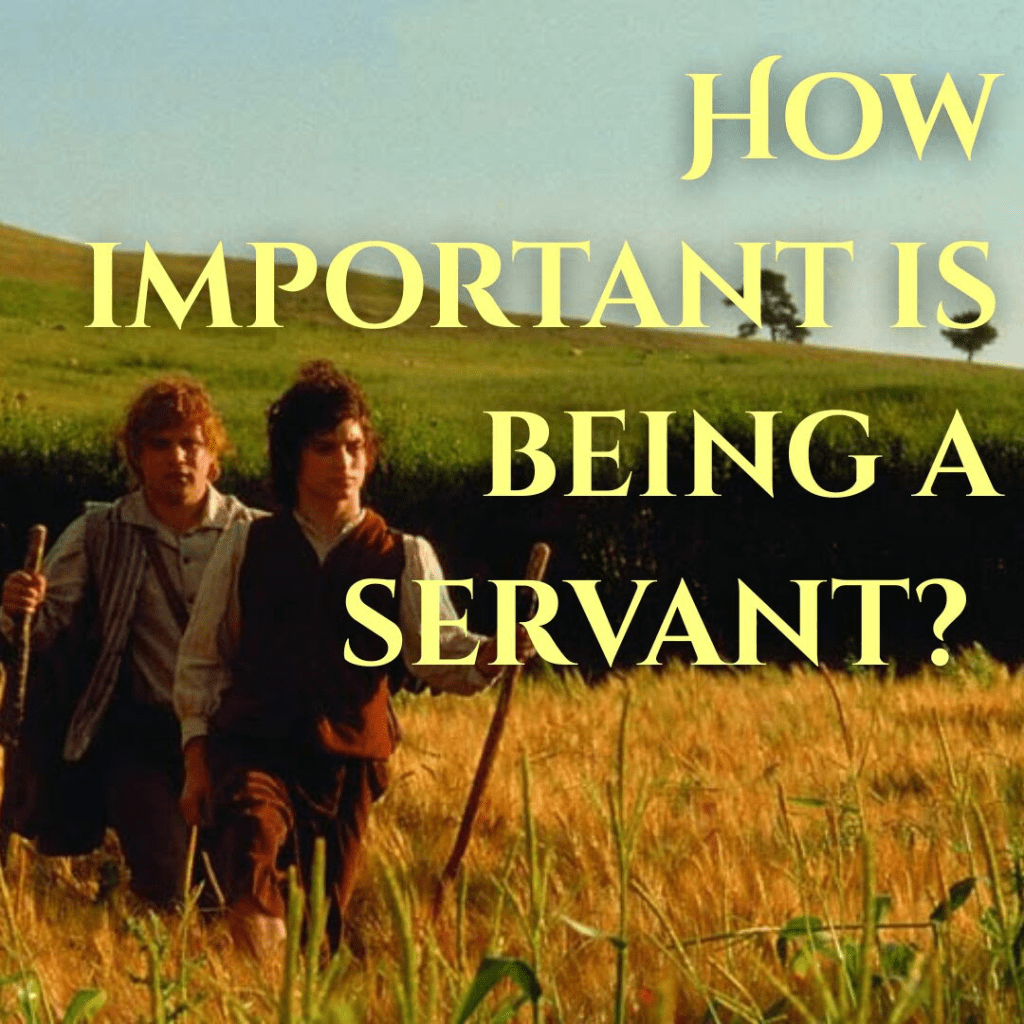
In J.R.R. Tolkien’s The Lord of the Rings, the fate of the world rests on a ring. Forged by the Dark Lord Sauron, the Ring of Power corrupts all who possess it. It needs to be destroyed. Someone has to carry the Ring into the heart of enemy territory and destroy it in the fires of Mount Doom.
The unlikely ring bearer is Frodo Baggins, a small hobbit from the Shire. As the story unfolds, the burden of the Ring grows heavier. It weakens his body. It clouds his mind. It isolates him from his companions. By the time he reaches the aptly named Mount Doom, he is staggering under the weight of the ring.
But Frodo is not alone. He has Samwise Gamgee with him.
Sam is Frodo’s gardener. He was not chosen to bear the ring. He is not given the “important” role. He begins the story as a servant, packing supplies, cooking meals, and worrying about potatoes. If you were assembling a team to save the world, Sam would not be your obvious pick. Yet anyone who knows the story knows this: Frodo would never have made it to Mount Doom without Sam. When Frodo collapses, Sam carries him. When Frodo despairs, Sam speaks hope. When the path disappears, Sam keeps walking. Sam fights when necessary, but more often than not, he simply serves.
What was Tolkien’s inspiration for Samwise? He revealed it in an interview. Tolkien served as a second lieutenant in World War I, enduring the brutal conditions of trench warfare. In those trenches, he encountered a class of soldiers known as batmen. In the British army, a batman was an enlisted man assigned as a personal servant to an officer. His tasks were unglamorous: prepare meals, clean uniforms, maintain equipment, carry extra gear, make tea, run messages. In the mud of the trenches, they shaved their officers, washed their clothes, and set up their quarters.
These batmen lived and served under shellfire, in the cold, with the rats, and experienced exhaustion. Their daily work often consisted of what seemed insignificant: cooking, cleaning, carrying. Tolkien saw them up close. And he never forgot them.
In a 1956 letter, he wrote:
“My Sam Gamgee is indeed a reflection of the English soldier, of the privates and batmen I knew in the 1914 War, and recognized as so far superior to myself.”
That sentence speaks to the profound impact these men had on Tolkien. “So far superior to myself.” Tolkien was the officer. By rank and education, he stood above them. Yet he believed the quiet endurance and loyalty of those ordinary soldiers surpassed his own. Tolkien understood something that war teaches quickly: Leaders cannot lead if no one serves. Commanders cannot function without someone to clean, cook, carry, and sustain. Armies do not move on speeches; they move on meals prepared in the mud.
The great moments of history are built on unnoticed faithfulness. It is human nature to love the climactic scene, such as Frodo at Mount Doom. In the Bible, we are inspired by David facing Goliath. We love the dramatic language of spiritual warfare and the heroes listed in Hebrews 11. We gravitate toward the epic, the visible, the extraordinary. But most of the believer’s life is not lived at Mount Doom.
It is lived in kitchens, laundry rooms, offices, and hospital waiting rooms. In these places, there are daily, repetitive acts of service that no one applauds: cooking a meal for a weary family member; showing up to work with integrity when no one notices; preparing Sunday school lessons; cleaning a church building; praying for someone who will never know you did; raising children in quiet consistency; serving aging parents; answering emails; paying bills; folding clothes.
In Luke 19, when the Lord describes His return and the evaluation of His servants, the praise He gives is striking: “Well done, good and faithful servant.” Not “good and famous.” Not “good and influential.” Not “good and impressive.”
Faithful.
Faithful implies repetition. Showing up day after day and doing what was entrusted to you without needing recognition. It is not a single dramatic act. It is a word that describes a life lived consistently, like Samwise and the batmen who inspired him.
The kingdom to come will not measure greatness the way this world does. It will not be impressed with numbers or noise. What will matter is whether we were faithful with what we were given, whether in great trials or small tasks. The steady obedience in the mundane may count for more than the single act of visible bravery.
Frodo reached Mount Doom because Sam kept walking.
Armies held their lines because unnamed soldiers known as batmen kept serving.
And believers finish well, not because every day is epic, but because, in the quiet and the ordinary, they remain faithful.
The post The Good and Faithful Hobbit appeared first on Grace Evangelical Society.