I will return to blogging sometime after November 1. In the meantime: please pray that God would be merciful regarding my headaches and please pray that He will continue to complete the Good Work He started in us! (Phil 1:6)
Pastor Scott
with Pastor Scott

I will return to blogging sometime after November 1. In the meantime: please pray that God would be merciful regarding my headaches and please pray that He will continue to complete the Good Work He started in us! (Phil 1:6)
Pastor Scott

There is a saying amongst public speakers that “familiarity breeds contempt.” The thinking is that if you repeat yourself too often, the audience will stop listening. There is a contradictory proverb that says, “Repetition stresses importance.” Hebrews 12:1-2 is just such a verse. You’ve heard it so often that it’s easy to blow off because it’s overly familiar. But today I heard it preached at the funeral of a young woman and it took on a deeper meaning!
Therefore, since we are surrounded by so great a cloud of witnesses, let us also lay aside every weight, and sin which clings so closely, and let us run with endurance the race that is set before us, looking to Jesus, the founder and perfecter of our faith, who for the joy that was set before him endured the cross, despising the shame, and is seated at the right hand of the throne of God.
YBIC,
Pastor Scott

YBIC,
Pastor Scott

In 2027, I intend to do a sermon series about “Why We Believe What We Believe.” I was talking to our Youth Pastor about the challenges to faith our students face, and he said that it’s not so much “Genesis isn’t real”, or “You can’t trust the manuscripts”, like it was when we were kids. He said they are specifically going after 2 Peter,* for instance, as a way to discredit the canonicity of the entire Pauline corpus.
Obviously I can’t defend the entirety of Paul in one article, but I was curious what the “kids” might be hearing. So I went to YouTube and typed “Casting Doubt on the Apostle Paul.” The second video I watched asserted that it was Paul, and Paul alone, who offered Christianity to the Gentiles. The rest of the New Testament, according to this presenter, was entirely to the Jews. It was said so sincerely and so assertively, I would have believed it… had I not remembered the sheet dream! Remember the sheet dream? Who had that dream? Was it Paul? Was it Paul that met with Cornelius? Was it Paul that led Cornelius to the Lord? Was it Paul that baptized Cornelius’ household? No, it was Peter! The YouTubers whole point can be defeated with one passage, but when I’m watching on my phone, who is there to remind me?
Pray with me for God’s protection from these wolves!
Pastor Scott
*2 Peter 3:15-16
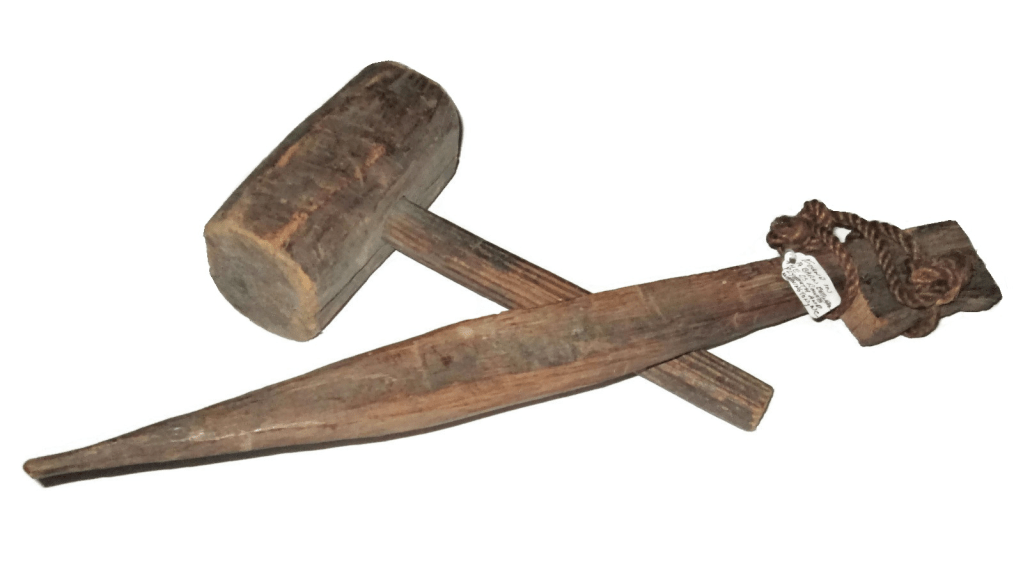
One of my weaknesses as a speaker is that I get so engaged in the one-way conversation I’m having with my audience (the congregation), I fail to look down at the papers I’ve prepared to share with them. This week as I was filing Sunday’s sermon I found three “tent-peg quotes” I had intended to share…
May God always be expanding our minds to His Glory,
Pastor Scott

Bruce Goodrich was being initiated into the cadet corps at Texas A & M University. One night, Bruce was forced to run until he dropped — but he never got up. Bruce Goodrich died before he even entered college.
A short time after the tragedy, Bruce’s father wrote this letter to the administration, faculty, student body, and the corps of cadets: “I would like to take this opportunity to express the appreciation of my family for the great outpouring of concern and sympathy from Texas A & M University and the college community over the loss of our son Bruce. We were deeply touched by the tribute paid to him in the battalion. We were particularly pleased to note that his Christian witness did not go unnoticed during his brief time on campus.”
Mr. Goodrich went on: “I hope it will be some comfort to know that we harbor no ill will in the matter. We know our God makes no mistakes. Bruce had an appointment with his Lord and is now secure in his celestial home. When the question is asked, ‘Why did this happen?’ perhaps one answer will be, ‘So that many will consider where they will spend eternity.'”
Our Daily Bread, March 22, 1994.
I was planning to write a totally different blog this week, but for some reason this story grabbed me. I don’t know if it’s for all of us or for just one reader, but I trust God will use it according to the kind intentions of His will!
Yours, because I’m His,
Pastor Scott
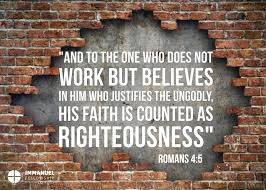
“It is not the strength of your faith but the object of your faith that actually saves you.” – Timothy Keller*
While most believers would objectively agree with Pastor Tim here; It’s been my observation that there are very sincere believers out there who often don’t speak that way in personal dialog. Faith is often spoken of as effort “you have to really, really, really believe with your whole heart.” I know those folks mean well, and I’m sure the added qualifiers are a result of having watched seeds get choked out by thorns and thistles, but it’s good to be reminded that Christ Himself compared saving faith to simply “looking” at the serpent in the wilderness (Numbers 21). Paul calls it a “free gift” 3 times in Romans 5 and 6 and writes over and over that we can’t earn it, we are saved only by God’s Grace through the person and work of Jesus.
This quotation reminds of an illustration I first heard attributed to F.B. Meyer. Imagine that Noah, who preached to his contemporaries as he spent 100 years building the Ark (2 Peter 2:5), instructed them to hold on to pegs that he had affixed to the sides of the ark. Imagine that his message was “If we can hold on tightly enough as the waves and wind buffet the ark, we will be saved.” We of course know that Genesis 7:16 says, “Those that entered, male and female of all flesh, entered as God had commanded him; and the Lord closed it behind him.” Their salvation was totally in the Lord’s hands – as is ours!
YBIC,
Pastor Scott
*Pastor Keller was part of a group that I didn’t always agree with, but I wholeheartedly agree with this quotation.

…He might have a lot to say or he might just say:
Watch ye, stand fast in the faith, acquit yourselves like men, be strong.
(1 Corinthians 16:13 Edits added, because I love the KJV here, but if you didn’t grow up with it “quit you like men” is nonsensical)
By Ken Yates on May 05, 2026 10:00 am
I, Pastor Scott, received this blog on Tuesday form one of the “Grace” sites I subscribe. I am sharing not, just, because I’m a big fan of The Trilogy, but also because the article makes a great point!
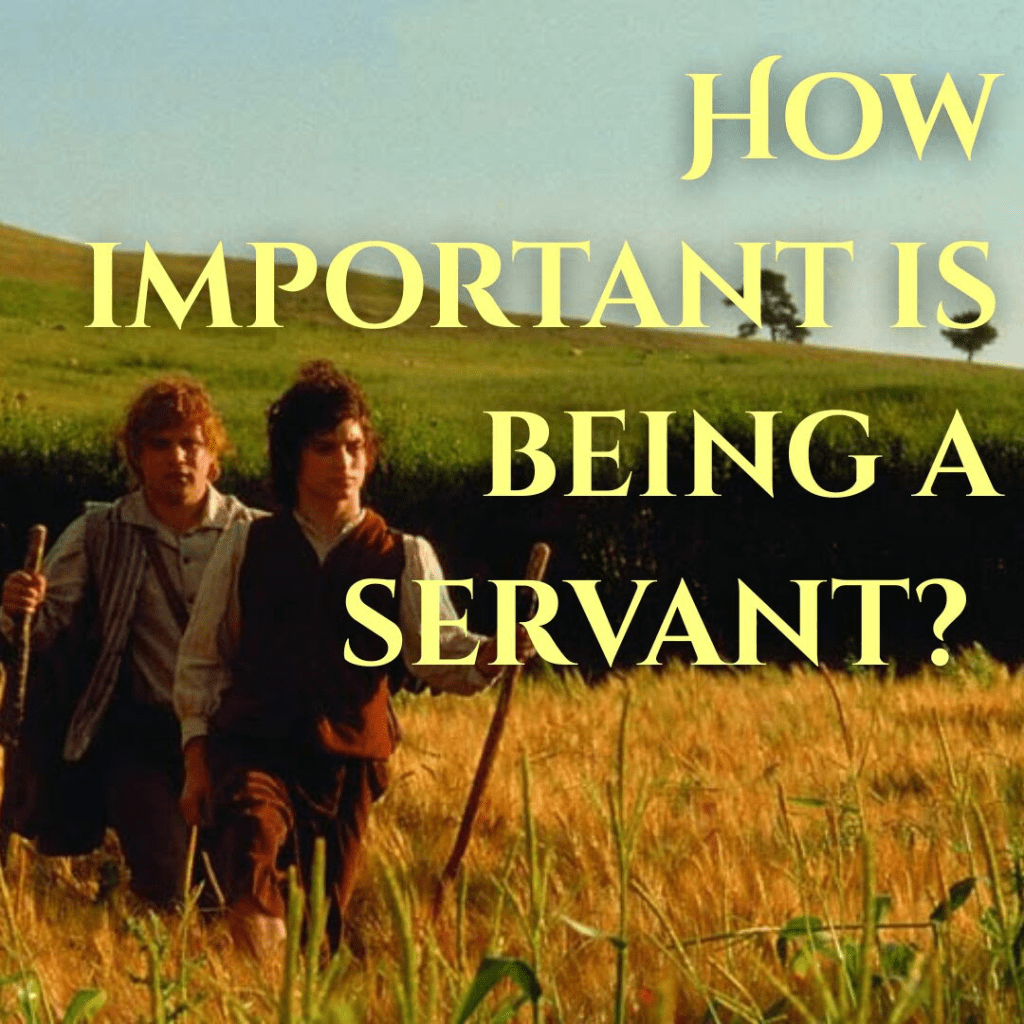
In J.R.R. Tolkien’s The Lord of the Rings, the fate of the world rests on a ring. Forged by the Dark Lord Sauron, the Ring of Power corrupts all who possess it. It needs to be destroyed. Someone has to carry the Ring into the heart of enemy territory and destroy it in the fires of Mount Doom.
The unlikely ring bearer is Frodo Baggins, a small hobbit from the Shire. As the story unfolds, the burden of the Ring grows heavier. It weakens his body. It clouds his mind. It isolates him from his companions. By the time he reaches the aptly named Mount Doom, he is staggering under the weight of the ring.
But Frodo is not alone. He has Samwise Gamgee with him.
Sam is Frodo’s gardener. He was not chosen to bear the ring. He is not given the “important” role. He begins the story as a servant, packing supplies, cooking meals, and worrying about potatoes. If you were assembling a team to save the world, Sam would not be your obvious pick. Yet anyone who knows the story knows this: Frodo would never have made it to Mount Doom without Sam. When Frodo collapses, Sam carries him. When Frodo despairs, Sam speaks hope. When the path disappears, Sam keeps walking. Sam fights when necessary, but more often than not, he simply serves.
What was Tolkien’s inspiration for Samwise? He revealed it in an interview. Tolkien served as a second lieutenant in World War I, enduring the brutal conditions of trench warfare. In those trenches, he encountered a class of soldiers known as batmen. In the British army, a batman was an enlisted man assigned as a personal servant to an officer. His tasks were unglamorous: prepare meals, clean uniforms, maintain equipment, carry extra gear, make tea, run messages. In the mud of the trenches, they shaved their officers, washed their clothes, and set up their quarters.
These batmen lived and served under shellfire, in the cold, with the rats, and experienced exhaustion. Their daily work often consisted of what seemed insignificant: cooking, cleaning, carrying. Tolkien saw them up close. And he never forgot them.
In a 1956 letter, he wrote:
“My Sam Gamgee is indeed a reflection of the English soldier, of the privates and batmen I knew in the 1914 War, and recognized as so far superior to myself.”
That sentence speaks to the profound impact these men had on Tolkien. “So far superior to myself.” Tolkien was the officer. By rank and education, he stood above them. Yet he believed the quiet endurance and loyalty of those ordinary soldiers surpassed his own. Tolkien understood something that war teaches quickly: Leaders cannot lead if no one serves. Commanders cannot function without someone to clean, cook, carry, and sustain. Armies do not move on speeches; they move on meals prepared in the mud.
The great moments of history are built on unnoticed faithfulness. It is human nature to love the climactic scene, such as Frodo at Mount Doom. In the Bible, we are inspired by David facing Goliath. We love the dramatic language of spiritual warfare and the heroes listed in Hebrews 11. We gravitate toward the epic, the visible, the extraordinary. But most of the believer’s life is not lived at Mount Doom.
It is lived in kitchens, laundry rooms, offices, and hospital waiting rooms. In these places, there are daily, repetitive acts of service that no one applauds: cooking a meal for a weary family member; showing up to work with integrity when no one notices; preparing Sunday school lessons; cleaning a church building; praying for someone who will never know you did; raising children in quiet consistency; serving aging parents; answering emails; paying bills; folding clothes.
In Luke 19, when the Lord describes His return and the evaluation of His servants, the praise He gives is striking: “Well done, good and faithful servant.” Not “good and famous.” Not “good and influential.” Not “good and impressive.”
Faithful.
Faithful implies repetition. Showing up day after day and doing what was entrusted to you without needing recognition. It is not a single dramatic act. It is a word that describes a life lived consistently, like Samwise and the batmen who inspired him.
The kingdom to come will not measure greatness the way this world does. It will not be impressed with numbers or noise. What will matter is whether we were faithful with what we were given, whether in great trials or small tasks. The steady obedience in the mundane may count for more than the single act of visible bravery.
Frodo reached Mount Doom because Sam kept walking.
Armies held their lines because unnamed soldiers known as batmen kept serving.
And believers finish well, not because every day is epic, but because, in the quiet and the ordinary, they remain faithful.
The post The Good and Faithful Hobbit appeared first on Grace Evangelical Society.