

Month: June 2026

When Rosemary, my youngest child, was three, she was given a little rag doll, which quickly became an inseparable companion. She had other toys that were intrinsically far more valuable, but none that she loved like she loved the rag doll.
Soon the rag doll became more and more rag and less and less doll. It also became more and more dirty. If you tried to clean the rag doll, it became more ragged still. And if you didn’t try to clean the rag doll, it became dirtier still. The sensible thing to do was to trash the rag doll. But that was unthinkable for anyone who loved my child. If you loved Rosemary, you loved the rag doll—it was part of the package.
“If anyone says, ‘I love God’ yet hates his brother or sister, he is a liar,” (I John 4:20) “Love me, love my rag dolls,” says God, “including the one you see when you look in the mirror. This is the first and greatest commandment.”
– Ian Pitt-Watson
YBIC,
Pastor Scott

In 2027, I intend to do a sermon series about “Why We Believe What We Believe.” I was talking to our Youth Pastor about the challenges to faith our students face, and he said that it’s not so much “Genesis isn’t real”, or “You can’t trust the manuscripts”, like it was when we were kids. He said they are specifically going after 2 Peter,* for instance, as a way to discredit the canonicity of the entire Pauline corpus.
Obviously I can’t defend the entirety of Paul in one article, but I was curious what the “kids” might be hearing. So I went to YouTube and typed “Casting Doubt on the Apostle Paul.” The second video I watched asserted that it was Paul, and Paul alone, who offered Christianity to the Gentiles. The rest of the New Testament, according to this presenter, was entirely to the Jews. It was said so sincerely and so assertively, I would have believed it… had I not remembered the sheet dream! Remember the sheet dream? Who had that dream? Was it Paul? Was it Paul that met with Cornelius? Was it Paul that led Cornelius to the Lord? Was it Paul that baptized Cornelius’ household? No, it was Peter! The YouTubers whole point can be defeated with one passage, but when I’m watching on my phone, who is there to remind me?
Pray with me for God’s protection from these wolves!
Pastor Scott
*2 Peter 3:15-16
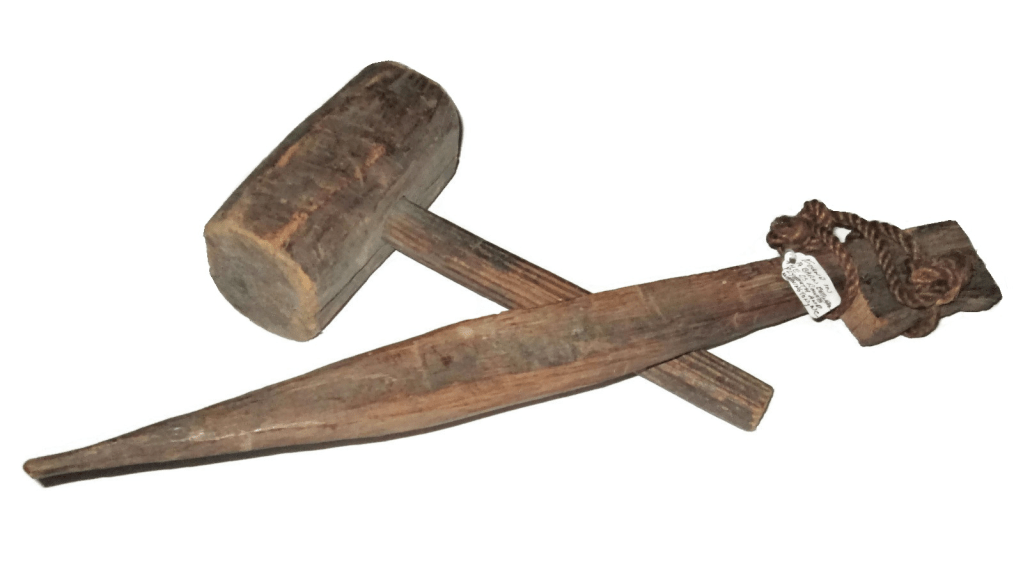
One of my weaknesses as a speaker is that I get so engaged in the one-way conversation I’m having with my audience (the congregation), I fail to look down at the papers I’ve prepared to share with them. This week as I was filing Sunday’s sermon I found three “tent-peg quotes” I had intended to share…
- Divine Security and Leadership: In the Old Testament, a secure tent peg symbolizes a firm leader who upholds a community or nation. For instance, the Messiah is prophesied as a leader who provides ultimate security, compared to a “peg in a sure place” (Isaiah 22:23).
- Expansion and Growth: Lengthening cords and strengthening “stakes” (or tent pegs) is used metaphorically to represent the expansion of God’s kingdom, urging believers to prepare their hearts for greater spiritual territory (Isaiah 54:2).
- Unexpected Deliverance: In the Book of Judges, a tent peg serves as an instrument of divine justice. A woman named Jael used an ordinary tent peg and a hammer to defeat Sisera, the oppressive commander of Israel’s enemies, demonstrating how God uses ordinary, humble means to achieve His purposes.
May God always be expanding our minds to His Glory,
Pastor Scott

