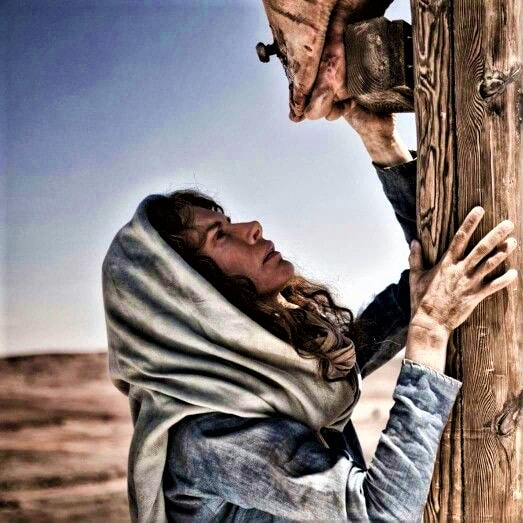
Yield! Jan 10, 2025

The following was published on Jan 7, 2025 on a Blog called “Thoughts about God”

I trust you’ll be blest on this snowy morning – Pastor Scott

————————————————————————————

The high and lofty one who lives in eternity, the Holy One, says this:

I live in the high and holy place with those whose spirits are contrite and humble. I restore the crushed spirit of the humble and revive the courage of those with repentant hearts.” Isaiah 57:15 NKJV

Kathryn Kuhlman once said that God is not looking for golden vessels or silver vessels, but yielded vessels.

The yielded vessel is a sanctified vessel—cleansed and set apart from sin for God’s purposes. It is the yielded vessel that is a vessel of honor (2 Timothy 2:21).

The yielded vessel is a dependent vessel—It does not rely upon its own resources or abilities. It recognizes its need to be totally dependent upon the Lord. A yielded vessel walks in humility, giving God its consent to be all. It knows that without the presence of the Lord, it is an empty vessel with nothing to offer.

The yielded vessel is a receptive vessel—Water seeks out the lowest place as it flows. Pour out a bucket of water on the side of a hill and it will not follow the path up the hill, but down it. It is into the yielded vessel that the Holy Spirit flows.

“We have this treasure in earthen vessels, that the excellence of the power may be of God and not of us.” 2 Corinthians 4:7 NKJVLord, I am Your yielded vessel.
I choose to be set apart, lowly, humble, dependent—
Not to be a useless vessel, but to be a vessel filled with You.
Pick me up, or set me down.
Use me now, or use me later.
Keep me active, or keep me quiet.
Put me in a prominent place, or put me in an unnoticeable place.
Use me here, or use me somewhere else.
Use me for special occasions, or use me for everyday occurrences.
Either way, Lord, I am content to be in Your hands, in Your care, in Your keeping—to be known by You, to be used by You, for whatever is pleasing to You, and brings You glory.

Faith or Sight?  12.13.2024

Last Sunday we were talking about Faith in the light of catastrophe: “Though the fig trees should not blossom…”  But time got away and we didn’t talk as much about just everyday living by faith as I had intended.  This “got questions” article is a good thought provoker in that direction! – Pastor Scott

What does it mean to walk by faith and not by sight?              (2 Corinthians 5:7)

Second Corinthians 5:6–7 says, “So we are always of good courage. We know that while we are at home in the body we are away from the Lord, for we walk by faith, not by sight” (ESV, emphasis added). Other versions use the word live, rather than walk. The “walk” here is a metaphorical reference to the way a person conducts his or her life. We still use the phrase “all walks of life” to mean a variety of lifestyles or cultures.

The apostle Paul reminds his readers that followers of Christ must not build their lives around things that have no eternal significance. Rather than pursuing the same things the world pursues, a Christian should focus on the unseen realities such as Jesus and heaven. Paul goes on to say, “So whether we are at home or away, we make it our aim to please him. For we must all appear before the judgment seat of Christ, so that each one may receive what is due for what he has done in the body, whether good or evil” (2 Corinthians 5:9–10). Jesus instructed us to store up treasure in heaven (Matthew 6:19–20; Luke 12:33). He promised rewards to everyone who does His will (Matthew 16:27; 1 Peter 1:17; Revelation 22:12) and punishment for those who reject Him (Matthew 25:24–46; John 3:16–18).

Walking by faith means living life in light of eternal consequences. To walk by faith is to fear God more than man; to obey the Bible even when it conflicts with man’s commands; to choose righteousness over sin, no matter what the cost; to trust God in every circumstance; and to believe God rewards those who seek Him, regardless of who says otherwise (Hebrews 11:6).

Rather than loving the things of this world (1 John 2:15–16), Christians should spend their lives glorifying God in everything they do (1 Corinthians 10:31). It requires faith to live this way because we cannot see, hear, or touch anything spiritual. When we base our lives on the truth of God’s Word, rather than on the popular philosophy of our day, we are going against our natural inclinations. Our natural instinct may be to hoard money, but walking by faith says we should give to those in need (Luke 11:41; Ephesians 4:28). Society may say that sexual immorality is acceptable, but those who walk by faith base their standards on God’s unchanging Word, which says any sex outside of marriage is sin (1 Corinthians 6:18; Ephesians 5:3; Galatians 5:19). To walk by faith requires that we tune our hearts to the voice of the Holy Spirit and the truth of His Word (John 10:27; 16:13). We choose to live according to what God reveals to us, rather than trust our own understanding (Proverbs 3:5–6).

Am I Counting?  Nov 22, 2024

As this blog will post a week before Thanksgiving (and may be my last until December), I thought I’d write on Psalm 103 (posted below in case your Bible isn’t handy).  The whole time I was thinking about it a hymn from childhood kept going through my head.  I hope this gets it running through yours!

COUNT YOUR BLESSINGS   

1 When upon life’s billows you are tempest tossed,

When you are discouraged, thinking all is lost,

Count your many blessings, name them one by one,

And it will surprise you what the Lord hath done.

Refrain:
Count your blessings, name them one by one;
Count your blessings, see what God hath done;
Count your blessings, name them one by one;
Count your many blessings, see what God hath done.2 Are you ever burdened with a load of care?

2.  Does the cross seem heavy you are called to bear?
Count your many blessings, ev’ry doubt will fly,
And you will be singing as the days go by. [Refrain]

3.   When you look at others with their lands and gold,
Think that Christ has promised you His wealth untold;
Count your many blessings, money cannot buy
Your reward in heaven, nor your home on high. [Refrain]

4.   So, amid the conflict, whether great or small,
Do not be discouraged, God is over all;
Count your many blessings, angels will attend,
Help and comfort give you to your journey’s end. [Refrain]

Baptist Hymnal, 1991*

Trusting you have at least one more blessing than challenge to count!

Pastor Scott

Psalm 103

Praise for the Lord’s Mercies.   A Psalm of David. 

1  Bless the Lord, O my soul,
And all that is within me, bless His holy name.

2  Bless the Lord, O my soul,
And forget none of His benefits;

3  Who pardons all your iniquities,
Who heals all your diseases;

4  Who redeems your life from the pit,
Who crowns you with lovingkindness and compassion;

5  Who satisfies your years with good things,
So that your youth is renewed like the eagle.

6  The Lord performs righteous deeds
And judgments for all who are oppressed.

7  He made known His ways to Moses,
His acts to the sons of Israel.

8  The Lord is compassionate and gracious,
Slow to anger and abounding in lovingkindness.

9  He will not always strive with us,
Nor will He keep His anger forever.

10  He has not dealt with us according to our sins,
Nor rewarded us according to our iniquities.

11  For as high as the heavens are above the earth,
So great is His lovingkindness toward those who fear Him.

12  As far as the east is from the west,
So far has He removed our transgressions from us.

13  Just as a father has compassion on his children,
So the Lord has compassion on those who fear Him.

14  For He Himself knows our frame;
He is mindful that we are but dust.

15  As for man, his days are like grass;
As a flower of the field, so he flourishes.

16  When the wind has passed over it, it is no more,
And its place acknowledges it no longer.

17  But the lovingkindness of the Lord is from everlasting to everlasting on those who fear Him,
And His righteousness to children’s children,

18  To those who keep His covenant
And remember His precepts to do them.

19  The Lord has established His throne in the heavens,
And His sovereignty rules over all.

20  Bless the Lord, you His angels,
Mighty in strength, who perform His word,
Obeying the voice of His word!

21  Bless the Lord, all you His hosts,
You who serve Him, doing His will.

22  Bless the Lord, all you works of His,
In all places of His dominion;
Bless the Lord, O my soul!

*The song was published in 1897; 1991 was the pub. Date of the Baptist Hymnal I found online.

Priorities – 09.13.2024

When I get caught up in delivering a message (or the details of a picnic), I often leave out written illustrations or quotes I had intended to share during the message.  These two are so poignant I thought they were worth printing here.

On Sunday, I made mention of the casualness with which the people of Judah were approaching Temple worship.  It was so bad that God called their offering worthless and their mere presence in the Temple a “trampling of My courts” (Is 1:12).  It was in light of this irreverence that God showed His prophet WHO He was (Is 6).  

The two quotations below, which may be familiar to some readers; are both calls to be less casual about God and our relationship with Him!   ~Blessings, Pastor Scott

“Christianity, if false, is of no importance, and if true, of infinite importance, the only thing it cannot be is moderately important.”

C.S. Lewis

“What comes into our minds when we think about God is the most important thing about us…..Worship is pure or base as the worshiper entertains high or low thoughts of God.  For this reason the gravest question before the Church is always God Himself, and the most portentous fact about any man is not what he at a given time may say or do, but what he in his deep heart conceives God to be like. We tend by a secret law of the soul to move toward our mental image of God. This is true not only of the individual Christian, but of the company of Christians that composes the Church. Always the most revealing thing about the Church is her idea of God, just as her most significant message is what she says about Him or leaves unsaid, for her silence is often more eloquent than her speech. …”

A.W. Tozer (The Knowledge of the Holy)

Oh My Soul, Hush! – July 26, 2024

The English word “disciple” is from Latin discipulus; “pupil, student, follower.” Because the Greek manuscripts were translated into Latin long before English was ever a language and Romans came to the British isles.  The Latin-based word “disciple” translates the NT Greek word mathéteuó and most literally means “learner” (compare Matthew 28:19 in KJV and NASB – Teach and Disciple translate the same Greek word). 

So a disciple is a student. In the first century a Rabbi’s student typically followed him around.  Jesus’ students (disciples) were given lots of instructions as they followed Him for those three years and then they changed the world!

Because of that model, we often see discipleship as one and done… and, it would be if:

 a) our retention was perfect

 b) our soul/heart didn’t play us falsely

  1. Psalm 119 deals with retention.  We need to be reviewing, meditating, and studying God’s Word daily.  Pride and/or boredom creep in and tell us that we got it or that we are overly familiar.  Before long we are skipping days, then weeks, and next thing we know the knowledge we once held dear is buried beneath spreadsheet macros and sports scores (or quilting patterns and recipes).   In Colossians 3, Paul writes:  “Let the word of Christ richly dwell within you, with all wisdom teaching and admonishing one another with psalms and hymns and spiritual songs, singing with thankfulness in your hearts to God.”  Think for a minute about that word “let”.  Imagine you have a cup of water.  How do you “let” the water be in the cup?  First you don’t dump it out.  Secondly, you don’t try to put something else in there that pushes out the water.  🙂
  1. Psalm 42 deals with our cantankerous souls.   Before we turn there let’s examine the first human sin.  Adam and Eve knew their Creator personally.  They had a total of one commandment to remember. They were living idyllic lives.  It wasn’t a lack of knowledge that brought them to sin. Satan was able to convince them (her) that she had an unmet need in her life that she hadn’t even known about before and her rebellious heart/soul responded.  He still works that way!  We have more revelation than Eve had and we also have more temptations than Eve had.  We have to develop the habit from very early of not listening to our own hearts!  For the last several generations the world’s best advice has been “follow your heart” or “be true to yourself” and that advice is straight from the father of lies!  The Bible says we need to talk to our souls (ourselves) and remind our souls that our hope is in God!   – Pastor Scott

42  As the deer pants for the water brooks,
So my soul pants for You, O God.

My soul thirsts for God, for the living God;
When shall I come and appear before God?

My tears have been my food day and night,
While they say to me all day long, “Where is your God?”

These things I remember and I pour out my soul within me.
For I used to go along with the throng and lead them in procession to the house of God, With the voice of joy and thanksgiving, a multitude keeping festival.

Why are you in despair, O my soul?
And why have you become disturbed within me?
Hope in God, for I shall again praise Him
For the help of His presence.

O my God, my soul is in despair within me;
Therefore I remember You from the land of the Jordan
And the peaks of Hermon, from Mount Mizar.

Deep calls to deep at the sound of Your waterfalls;
All Your breakers and Your waves have rolled over me.

8 The Lord will command His lovingkindness in the daytime;
And His song will be with me in the night,
A prayer to the God of my life.

9 I will say to God my rock, “Why have You forgotten me?
Why do I go mourning because of the oppression of the enemy?”

10 As a shattering of my bones, my adversaries revile me,
While they say to me all day long, “Where is your God?”

11 Why are you in despair, O my soul?
And why have you become disturbed within me?
Hope in God, for I shall yet praise Him,
The help of my countenance and my God.

Ask the Pastor from Sunday’s Sermon – 2 Samuel 12

It seems that David’s consequences were passed to innocent parties (Bathsheba – victim, losing her son, baby dying).  How do we reconcile that with God’s “fairness” when explaining to children or perhaps to non-believers?

Great question.  Personally, I would likely start with Job 38-41 where God asks Job questions like,  “Where were you when I laid the foundation of the earth?” and “Have you ever in your life commanded the morning, and caused the dawn to know its place?”  In other words, He is God and He can do whatever He pleases and/or needs to do.

But that’s not a very satisfying answer from a human perspective.  A better answer is to talk about the ripple effect of our actions.  If a student is disruptive in class does he only affect his own learning?   If a mechanic in a two-man shop is always an hour late to work, does he only affect his own paycheck?  What about a guy driving the wrong way down a one-way road?  In each of these cases others are impacted, harmed, or maybe even killed.  In the same way David, a man and a King, chose to cross His God’s law and as a result both Uriah and the baby died and Bathsheba was twice grieved.  David’s selfish act affected more than just David; it affected a whole nation!  Great warning for us; as we wrestle with our own impulses!

Pastor Scott

This GotQuestions article makes a good argument that the baby was really rescued.  Take a read:  https://www.gotquestions.org/David-Bathsheba-child.html

Loose Ends – June 14, 2024

#1 of 2

“No one who is born of God practices sin, because His seed abides in him; and he cannot sin, because he is born of God” ~ 1 John 3:9

Several weeks (more likely months ago) I answered a question here about the verse above by posting the amplified translation which aligned the first half (practices) with the second half of the verse that declares an absolute.  A congregant pointed out a better resolution offered by the Bible Teacher Zane Hodges.  In his commentary on 1 John, Dr. Hodges reminds us of Christ’s imputed righteousness, which means by definition we stand before God without sin; our new nature is without sin.  Of course this new Holy Nature, should be affecting our flesh; or “walk” as it’s often called in Scripture, and therein lies the rub.  

Our flesh is so very used to living in this world that putting it off and putting righteousness on is, for many of us, a major ordeal and/or a daily struggle.  The temptations of the world aren’t something we deal with on an occasional basis, but are a constant assault on our senses.  So while I’m aware of the principle that Hodges teaches, I’m fearful of anything that would cause any of us to ignore the important teaching of Colossians 3, or Ephesians 4-6, or Galatians 5, by causing us to think that we can’t sin anymore. I’ve watched that happen and it inevitably leads to more sin.  So yes, it’s a good but VERY NUANCED resolution to the 1 Peter 3:9! 🙂 

#2 of 2

Recently I was discussing the Roman Catholic origin of some communion practices in the Bible Study Hour class I teach as we are working our way through 1 Corinthians.  As is my habit I was supporting my point with a relevant illustration which had me explaining the English word “repentance.”  As it happens our English word comes down to us  from the Latin poenitire “make sorry,” which comes from poena (penal; or punishment).  I went on to make the point that in the New Testament the word is Meta (change) + Noia (mind).  I was pointing out that only once in the NT sorrow and metanoia are linked (2 Cor 7:9-10), but most often it’s a call to change our orientation about who God is or about how to approach Him.  And in other literature of the time “metanoia” was used the same way we might say “he ‘changed his mind’ and didn’t go to the store that night.”  As you can imagine this led to a discussion that had nothing to do with communion and everything to do with how salvation was NOT dependent on how sorry we are for our sin.

During class I received a text asking: “So what about the Romans Road?”  Great question!  Paul spends most of the first three chapters of Romans making sure everyone understands that they are sinners who fall short of the glory of God.  He then makes the point that none of us can boast because we are not saved by our works but  we are saved by faith alone.  There is no mention in the text of Romans of “sorrow for sin.”  However, in the presentation instructions for the Romans road or the Wordless book, the script often says something like, “Now, ask them to pray and tell God how sorry they are about their sin.”  Having a “contrite heart” is Biblical.  David writes about it in Psalm 51 wherein he confesses his horrible sin.  Isaiah writes of those who have done evil and are now “lowly and contrite.”   Again, it’s not wrong, per se, to be sad that you lived a life of sin, but it’s not really part of a road in the Book of Romans.    

Pastor Scott

Asking the Pastor – May 3, 2024

“If God can do everything, then can He do nothing?”  Was a forwarded text message I received on Sunday night.  I don’t know who asked the question and, while I appreciate that there is “protection” in anonymity, it also requires that I make some guesses.  So here goes.

  1. I initially read this as a paradox question: “Can God make a rock he can’t lift?” or “Can God make a square circle?”   The “everything” contrasting with the “nothing.”  Christians have been wrestling with those questions for two millennia.  The conclusions have ranged from “He’s God and can do whatever He wills” to “That question is in itself absurd and God is a God of logic and reason.”  
  2. Then I thought, perhaps he meant “is God ever inactive?”  This ties directly to Genesis 2:2-3 wherein God says that he “rested on the 7th day.”  A closer examination shows us that God specifically rested from creating.  We know that He keeps the galaxies and even very atoms in our bodies spinning (Colossians 1:17) and that He doesn’t ever sleep (Psalm 121:4).  And we have countless verses that mention His watching presence (e.g. For the eyes of the Lord move to and fro throughout the earth that He may strongly support those whose heart is completely His – 2 Chronicles 16:9)!   And His accompanying presence (Be strong and courageous, do not be afraid or tremble at them, for the Lord your God is the one who goes with you. He will not fail you or forsake you.” Deuteronomy 31:6, cf. Matthew 28:20; Hebrews 13:5).  So my read of the Bible is that the answer is no, YHWH is never inactive.  He rested from the work of creating after 6 days, but He is an active, engaged, Sovereign! 

It’s also possible that the text sender meant “nothing” in the sense of “in my life” or “in answer to my prayers.”   My answer there would mostly be from the various Old Testament stories that teach us that God’s timing is often measured in years, decades, or even generations, while ours is measured in hours or days.  Also God is working with a massive 4-D chess board, and sometimes it’s not about me.  In 2000, I preached through the book of Genesis.  I will never forget how I was hit by Chapter 8 verse 1:  But God remembered Noah and all the beasts and all the cattle that were with him in the ark; and God caused a wind to pass over the earth, and the water subsided  (Genesis 8:1, emphasis added).  God hadn’t really forgotten His main character, the only humans left alive, it was the author’s way of saying that God’s attention had been elsewhere.   God had been busy bringing up the waters from  the depth and releasing the waters from the firmament.  He was destroying His first creation.  He was dealing with something OTHER than Noah and His family.  Not every crisis, nor every storm, nor every disagreement, nor every ”unsettling situation” is about me.  Sometimes, God is doing something else!  But He never removes His hand (John 10:28)!  And sometimes His answer to our prayer is simply, “No, my child.”

Hope this is a little bit helpful,

Pastor Scott

“I Can’t See God” – April 5, 2024

I’m reposting this both for its apologetic value and its devotional value.  BOTH serve as good reminders, PLEASE take the time to read this C.S. Lewis piece.  ~ Pastor Scott

In February 1963, C.S. Lewis published an essay exploring a number of topics related to space-travel, including the idea of finding God in space (A response to Nikita Khrushchev’s proclamation in 1961, that cosmonauts never saw God in space) He wrote:

The Russians, I am told, report that they have not found God in outer space… Looking for God—or Heaven—by exploring space is like reading or seeing all Shakespeare’s plays in the hope that you will find Shakespeare as one of the characters or Stratford as one of the places. Shakespeare is in one sense present at every moment in every play. But he is never present in the same way as Falstaff or Lady Macbeth. Nor is he diffused through the play like a gas…

Now of course this is only an analogy. I am not suggesting at all that the existence of God is as easily established as the existence of Shakespeare. My point is that, if God does exist, He is related to the universe more as an author is related to a play than as one object in the universe is related to another.

If God created the universe, He created space-time, which is to the universe as the metre is to a poem or the key is to music. To look for Him as one item within the framework which He Himself invented is nonsensical…

How, then, it may be asked, can we either reach or avoid Him?…in our own time and place, [avoiding God] is extremely easy. Avoid silence, avoid solitude, avoid any train of thought that leads off the beaten track. Concentrate on money, sex, status, health and (above all) on your own grievances. Keep the radio on. Live in a crowd. Use plenty of sedation. If you must read books, select them very carefully. But you’d be safer to stick to the papers. You’ll find the advertisements helpful; especially those with a sexy or a snobbish appeal.

About the reaching, I am a far less reliable guide. This is because I never had the experience of looking for God. It was the other way round; He was the hunter (or so it seemed to me) and I was the deer…

Space-travel really has nothing to do with the matter. To some, God is discoverable everywhere; to others, nowhere. Those who do not find Him on earth are unlikely to find Him in space. (Hang it all, we’re in space already; every year we do a huge circular tour in space.) But send a saint up in a spaceship and he’ll find God in space as he found God on earth. Much depends on the seeing eye.1

If we are Christians, we know and are known by the God who created the universe and have many reasons to give Him thanks. On a cautionary note, however, Lewis’s insight into how easy it is to avoid God has applicability to Christians as well as non-believers. Christians can avoid God by living their lives concentrating on money, sex, status and the like, and consequently remain spiritually immature and experience little of the transforming power of Christ. Let us keep our focus on Jesus as Lord and Savior, and pursue a life of holiness and righteousness.

“The heavens declare the glory of God, and the sky above proclaims his handiwork.”

PSALM 19:1 (ESV)


1 C.S. Lewis, The Seeing Eye, from Christian Reflections, edited by Walter Hooper, Grand Rapids, MI: Wm. B. Eerdmans Publishing Co., 1995, pp. 167-169, 171.

Jesus on Identity – 03.22.24

John 4 records the interaction between Jesus and the Samaritan woman at Jacob’s well.  In the first verses she is clearly identified as a “Samaritan”  – someone of a mixed race with whom Jews had little to do.  A “woman” – someone a Jewish man ought to steer clear of.  And, a “serial adulterer” that a righteous person should shun.   But Jesus, after using the I.D. to prove Who He is, blows right past that to her need for eternal life:  “but whoever drinks of the water that I will give him shall never thirst; but the water that I will give him will become in him a well of water springing up to eternal life” (John 4:14).  

Today, despite prison reform for thieves and swindlers, despite Weight Watchers and workout routines for sedentary over eaters, we live in a day where certain sinful behaviors, certain consistent temptations, are labeled as” identities;” unchangeable aspects of someone’s very nature.  When viewed with a little detachment, one can clearly see: 

a) Satan’s hand – you must accept what I do as who I am – imagine saying that to your PE teacher back in the day as he smacks the candy bar right out of your hand!

b) God’s wrath – Romans 1 says that as we suppress that worship of God and turn to the worship of creatures, He will give us over to unnatural lusts.  

That said, if you are told from the very beginning this is WHO you are, it’s no wonder that we have folks who identify themselves accordingly.

Jesus didn’t make an issue of this person’s race, gender, or sin proclivities when He offered her the Water of Life.  His concern was for her salvation.  Brothers and sisters that’s where our concern needs to be, too.  We aren’t going to beat Satan at his game in the media or by flying anti-rainbow flags.  Jesus is coming back on a white horse and He will deal with all that nonsense once and for all!

We need to love individuals and share the gospel with individuals.  If those individuals are believers struggling with this sin, then they need to be reassured that it’s just “a” sin not “the” sin.  Holiness is the goal for all of us.  We all struggle with being honest, with being faithful, with being just, with being loyal, with being pure of thought.  Their proclivity is a leaf on the tree, the root of which needs to be made holy by the blood of Jesus.

Pastor Scott

P.S.  The genesis of this blog was a rainbow flag flying in front of a church that previously seemed to have shown no such sign.   As I drove past I realized that their intention was to be loving, not to condone evil, their unseen error was believing the “identity deception.”