Descended into Hades??  – Feb 14, 2025

On Sunday (2/9) I preached on Mark 9 which deals with the place where “the worm does not die and the fire never goes out” – the place called Hell.

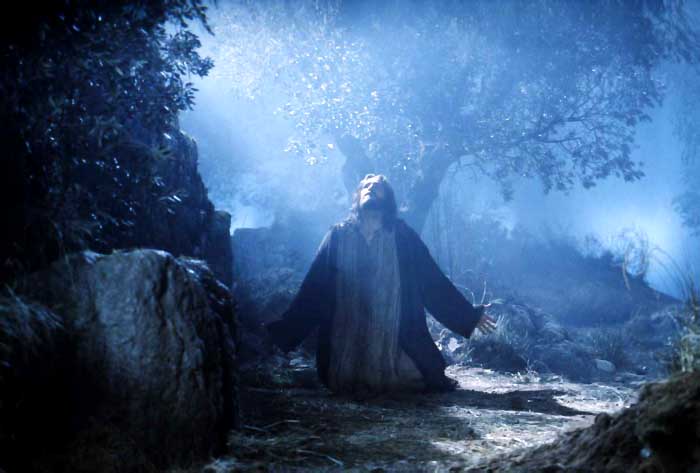
I got a question on the text line that results from the line in the Apostles Creed, posted below (appearing between the burial and resurrection) or from 1 Peter 3.  Where did Jesus go during his “death?”  The passage from which the Apostle’s Creed draws its conclusion is 1 Peter 3:18-20 which reads: 

 “For Christ also died for sins once for all, the just for the unjust, so that He might bring us to God, having been put to death in the flesh, but made alive in the spirit; in which also He went and made proclamation to the spirits now in prison, who once were disobedient, when the patience of God kept waiting in the days of Noah, during the construction of the ark, in which a few, that is, eight persons, were brought safely through the water”

Did Jesus go to Hades and preach to the spirits of the dead?  

Did He go to Hades and triumphantly proclaim His victory over sin and death?  

Or, is this a reference to Jesus’ spirit being with Noah when he preached to the lost of His day?  

I prefer the third interpretation, but it is textually the weakest of the three; the words of Jesus to the thief on the cross, “Truly, I say to you, today you will be with me in paradise” (Luke 23:43).  These words seem less subject to conjecture or misinterpretation.  I do NOT think Jesus was in Hell (or Hades) for those 3 days.  And on those rare occasions I’m called on to recite or sing the Creed, I stay silent during those moments.  

I understand why it’s there and I’m not going to go on a crusade to get it changed, I just think there is a better interpretation.

Pastor Scott (with thanks to William for reminding me of Luke 23:43)On Sunday (2/9) I preached on Mark 9 which deals with the place where “the worm does not die and the fire never goes out” – the place called Hell.

I got a question on the text line that results from the line in the Apostles Creed, poster below (appearing between the burial and resurrection) or from 1 Peter 3.  Where did Jesus go during his “death?”  The passage from which the Apostle’s Creed draws its conclusion is 1 Peter 3:18-20 which reads: 

 “For Christ also died for sins once for all, the just for the unjust, so that He might bring us to God, having been put to death in the flesh, but made alive in the spirit; in which also He went and made proclamation to the spirits now in prison, who once were disobedient, when the patience of God kept waiting in the days of Noah, during the construction of the ark, in which a few, that is, eight persons, were brought safely through the water”

Did Jesus go to Hades and preach to the spirits of the dead?  

Did He go to Hades and triumphantly proclaim His victory over sin and death?  

Or, is this a reference to Jesus’ spirit being with Noah when he preached to the lost of His day?  

I prefer the third interpretation, but it is textually the weakest of the three; the words of Jesus to the thief on the cross, “Truly, I say to you, today you will be with me in paradise” (Luke 23:43).  These words seem less subject to conjecture or misinterpretation.  I do NOT think Jesus was in Hell (or Hades) for those 3 days.  And on those rare occasions I’m called on to recite or sing the Creed, I stay silent during those moments.  

I understand why it’s there and I’m not going to go on a crusade to get it changed, I just think there is a better interpretation.

Pastor Scott (with thanks to William for reminding me of Luke 23:43)

Idols! February 7, 2025

“No one can serve two masters; for either he will hate the one and love the other, or he will be devoted to one and despise the other. You cannot serve God and wealth.” said Jesus in Matthew 6:24.

Our money can certainly be an idol! So can our career, our fitness or our family! At the same time to give away all my money, quit my job, let my body go to pot, and walk away from my family would be a quintessential failure!

So what should I do? Paul was faced with a similar conundrum as the believers were trying to figure out their convictions about idols. For them national idolatry was involved in how meat was produced and what days were honored. In that passage (Romans 14) he said: “One person regards one day above another, another regards every day alike. Each person must be fully convinced in his own mind {v. 5}.” Furthermore he says that the abstainer should not judge the “indulger” and the indulger should not regard the abstainer with contempt.

This is not a prescription for dealing with clear cut sin issues, but rather a call to respect another’s conviction about how to apply principles that aren’t precepts. Is having a 401K idolatry? Is having a new suit/dress idolatry? Is letting my kids color in church idolatry? And when does rooting for a particular sports team become idolatry? Let each person be convinced before God and let everyone be satisfied with that. Not my opinion, but rather that of the Spirit-filled Apostle – and a call for mindfulness, regarding our decisions and the decisions of others!

Pastor Scott

So what happened to the 12? – Jan 30, 2025

After Jesus ascended to heaven (Acts 1). The 11 remaining disciples appointed a brother named Matthias to replace Judas, who had committed suicide after betraying our Lord. This is a debated point because the Scripture gives us no indication whether or not God wanted them to do this, and many see the apostle Paul as God’s obvious replacement for Judas. While I personally tend to hold this point of view, I find it pointless to argue or debate. God has called all of us to the work he has for us and no one is more important or more holy or more loved in God’s kingdom than any other person.

What happened to these men after Jesus is based in part on historical record and in part on church tradition. Unfortunately politics enters into the traditions of men and so we have traditions claiming that James, the brother of John, went to Spain, when the Bible makes it clear that he was the first of the 12 to be martyred (killed) for his faith in Jesus, when he was put to the sword in the early days of the church in Jerusalem.

PETER

Peter was crucified around 66AD in Rome under the persecution of Emperor Nero. There are all kinds of unverified traditions about his death, most notably that he was crucified upside down because he didn’t consider himself worthy to die the same way Jesus did. 

JAMES

James was the first of the 12 to be put to death. King Herod had him killed by the sword in Jerusalem (Acts 12). There are some non-biblical traditions about James that I will address later. 

JOHN

The writer of the the Gospel of John, the book of the Revelation and three epistles bearing his name, John is the only one of the 12 that history says was not put to death for his faith, although he suffered greatly because of Jesus throughout his long life. Tradition says he ended his life ministering in the region around Ephesus in modern day Turkey and is buried there. 

ANDREW

The brother of Peter, Andrew traveled north, bringing the good news to what is now Russia and the western regions of the former Soviet Union. He later traveled through modern day Turkey and Greece where he was martyred.

PHILIP

Philip ministered in North Africa and then Asia Minor. Traditions says that a Roman Proconsul was so enraged that his wife had converted to Christianity because of Philip’s preaching that he had Philip brutally put to death. There is disagreement about the manor in which he died but no matter the method, it was because he fully believed that Jesus had died and risen from the grave. It is possible that Philip’s tomb was recently discovered (read about HERE).

BARTHOLOMEW/NATHANIEL

Bartholomew was apparently someone who loved to travel. Some accounts have him going to India with Thomas, then Armenia before heading along the trade routes between Ethiopia and the southern Arabian regions. While we are not sure how he met his end, tradition agrees that he was martyred for his faith. In some places he is listed as “Nathaniel” which could have been a family name or a name he was known by in the church. 

MATTHEW/LEVI

The gospel writer who had previously been a tax collector, Matthew traveled to modern day Iran and then down to Ethiopia, probably following established trade routes and preaching the gospel along the way. While some account do not include how he died, others say he was stabbed to death in Africa. 

Like Bartholomew, Matthew was known by more than one name: Levi. This other name is easier to pin down and is probably a family or tribal identification. 

THOMAS

Thomas get’s a bad rap. Although he doubted the resurrection at first, Thomas’ faith in the risen Jesus was strong enough to send him traveling east to Syria and Iraq to preach the gospel, eventually ending up in India were the Marthoma Christian tradition considers him to be their founder. The Marthoma tradition says that Thomas died by stabbing at the hands of four soldiers. 

JAMES THE SON OF ALPHAUES

Very possibly the brother of Matthew/Levi, James is believed to have preached in the regions north of Israel. A non-christian historical account says that he was stoned and then clubbed to death. He is sometimes known as James the Younger (younger brother of Levi?) or James the Lesser (which would have had different connotations then it does for us today). 

SIMON THE ZELOT

Simon’s ultimate end is somewhat unclear. I wrote earlier that politics gets involved in the traditions about the apostles. When Christianity became the official religion of the Roman Empire it became politically advantageous to be connected with the apostles or notable christian events or leaders. This means that places like Turkey, Greece, Rome and Jerusalem naturally had more power/influence than churches in places like Britain, France, Africa and Spain. 

As I said earlier, there are non-biblical traditions regarding the apostles. In the 12th century, a Spanish bishop began to promote the idea that James had come to Spain, despite the account of James’ martyrdom in Acts 12. The same is true with Simon the Zelot with different groups and agendas making claim to Simon’s legacy. The majority view seems to be that Simon was sawn in half in Persia.  

PHILIP

Little is known about Philip’s life after Acts 2. Some have tried to link him with the Philip found later in the book of Acts but the circumstantial evidence doesn’t seem to fit other than sharing the same name. Tradition says that he preached in the Phrygia region of Asia Minor (modern day Turkey) and was martyred for his faith in Jesus in the town of Hierapolis. 

JUDAS THADEUS 

The early church father Jerome called Jude “Trinomius” which means three names. Mark and Matthew list him by his family name “Thaddeus”, while Luke refers to him as Judas the Brother of James. Some have tried to link him with Jude, the half-brother of Jesus who wrote the book of the same name but we reject this view. 

Tradition holds that he preached the gospel in the area we could think of as Northern Syria, Iraq and Turkey. He was said to have been killed with arrows in Turkey’s mountainous northern region. 

MATTHIAS

Tradition says that Matthias traveled north, possibly as far as the Caspian Sea. He was martyred for his faith although the method of his death is unclear.

PAUL

Paul suffered for the Lord throughout his life. In addition to imprisonment and multiple threats to his life, Paul wrote in 2 Corinthians 11:25 that “Three times I was beaten with rods. Once I was stoned. Three times I was shipwrecked. Once I spent a whole night and a day adrift at sea.” 

Paul was beheaded in Rome in 66 AD, possibly at the same time as Peter.

JUDAS

Judas committed suicide after betraying Jesus. I mention this because every one of Jesus’ followers died. 10 of them as martyrs. John died of old age. But Judas chose a cursed path. He was not the only one who betrayed Jesus; all of the other disciples abandoned Jesus, Peter directly denied knowing him. Paul persecuted Jesus’ followers. Yet all of them embraced the grace and forgiveness of God and that same grace was available to Judas. 

Yield! Jan 10, 2025

The following was published on Jan 7, 2025 on a Blog called “Thoughts about God”

I trust you’ll be blest on this snowy morning – Pastor Scott

————————————————————————————

The high and lofty one who lives in eternity, the Holy One, says this:

I live in the high and holy place with those whose spirits are contrite and humble. I restore the crushed spirit of the humble and revive the courage of those with repentant hearts.” Isaiah 57:15 NKJV

Kathryn Kuhlman once said that God is not looking for golden vessels or silver vessels, but yielded vessels.

The yielded vessel is a sanctified vessel—cleansed and set apart from sin for God’s purposes. It is the yielded vessel that is a vessel of honor (2 Timothy 2:21).

The yielded vessel is a dependent vessel—It does not rely upon its own resources or abilities. It recognizes its need to be totally dependent upon the Lord. A yielded vessel walks in humility, giving God its consent to be all. It knows that without the presence of the Lord, it is an empty vessel with nothing to offer.

The yielded vessel is a receptive vessel—Water seeks out the lowest place as it flows. Pour out a bucket of water on the side of a hill and it will not follow the path up the hill, but down it. It is into the yielded vessel that the Holy Spirit flows.

“We have this treasure in earthen vessels, that the excellence of the power may be of God and not of us.” 2 Corinthians 4:7 NKJVLord, I am Your yielded vessel.
I choose to be set apart, lowly, humble, dependent—
Not to be a useless vessel, but to be a vessel filled with You.
Pick me up, or set me down.
Use me now, or use me later.
Keep me active, or keep me quiet.
Put me in a prominent place, or put me in an unnoticeable place.
Use me here, or use me somewhere else.
Use me for special occasions, or use me for everyday occurrences.
Either way, Lord, I am content to be in Your hands, in Your care, in Your keeping—to be known by You, to be used by You, for whatever is pleasing to You, and brings You glory.

Faith or Sight?  12.13.2024

Last Sunday we were talking about Faith in the light of catastrophe: “Though the fig trees should not blossom…”  But time got away and we didn’t talk as much about just everyday living by faith as I had intended.  This “got questions” article is a good thought provoker in that direction! – Pastor Scott

What does it mean to walk by faith and not by sight?              (2 Corinthians 5:7)

Second Corinthians 5:6–7 says, “So we are always of good courage. We know that while we are at home in the body we are away from the Lord, for we walk by faith, not by sight” (ESV, emphasis added). Other versions use the word live, rather than walk. The “walk” here is a metaphorical reference to the way a person conducts his or her life. We still use the phrase “all walks of life” to mean a variety of lifestyles or cultures.

The apostle Paul reminds his readers that followers of Christ must not build their lives around things that have no eternal significance. Rather than pursuing the same things the world pursues, a Christian should focus on the unseen realities such as Jesus and heaven. Paul goes on to say, “So whether we are at home or away, we make it our aim to please him. For we must all appear before the judgment seat of Christ, so that each one may receive what is due for what he has done in the body, whether good or evil” (2 Corinthians 5:9–10). Jesus instructed us to store up treasure in heaven (Matthew 6:19–20; Luke 12:33). He promised rewards to everyone who does His will (Matthew 16:27; 1 Peter 1:17; Revelation 22:12) and punishment for those who reject Him (Matthew 25:24–46; John 3:16–18).

Walking by faith means living life in light of eternal consequences. To walk by faith is to fear God more than man; to obey the Bible even when it conflicts with man’s commands; to choose righteousness over sin, no matter what the cost; to trust God in every circumstance; and to believe God rewards those who seek Him, regardless of who says otherwise (Hebrews 11:6).

Rather than loving the things of this world (1 John 2:15–16), Christians should spend their lives glorifying God in everything they do (1 Corinthians 10:31). It requires faith to live this way because we cannot see, hear, or touch anything spiritual. When we base our lives on the truth of God’s Word, rather than on the popular philosophy of our day, we are going against our natural inclinations. Our natural instinct may be to hoard money, but walking by faith says we should give to those in need (Luke 11:41; Ephesians 4:28). Society may say that sexual immorality is acceptable, but those who walk by faith base their standards on God’s unchanging Word, which says any sex outside of marriage is sin (1 Corinthians 6:18; Ephesians 5:3; Galatians 5:19). To walk by faith requires that we tune our hearts to the voice of the Holy Spirit and the truth of His Word (John 10:27; 16:13). We choose to live according to what God reveals to us, rather than trust our own understanding (Proverbs 3:5–6).

Hosea II – Dec 5, 2024

On Sunday December 1, I (Pastor Scott) preached on the book of Hosea.  As you may remember, God asked Hosea to marry a woman who would go on to cheat on him, thus allowing God’s prophet to experience adultery in his marital relationship just as God was experiencing in His relationship with Israel. 

Hosea also went and bought her back after she had run off “for good;” illustrating God’s covenant-keeping love which is the point of the book.  That said, there was another application I had wanted to stress and did not:

The command that Gomer repeatedly broke was “thou shalt not commit adultery.”  Jesus famously said in the Sermon on the Mount that we can break that command in our minds, which lines up nicely with the tenth commandment – “Thou shalt not covet”.

Maybe we all listened to the message on Hosea and thought, “Nope, I’m not cheating on God!”  I’m not “doing” anything that would constitute spiritual adultery!  It’s not like daydreaming about a bigger house, younger wife or a faster car is really a sin!  Or is it?

Aspirations for which we can work are excellent! (1 Timothy 3:1; Colossians 3:22-25); lustful discontent leads to sin; always (James 1:12-18; cf. Hebrews 13:5-6).

If putting other passions on the throne of our life is akin to adultery against our Lord and Savior, then daydreaming about different circumstances is akin to ungratefulness for the very gifts our Lord and Savior has bestowed!      

Just a thought,

Pastor Scott

Am I Counting?  Nov 22, 2024

As this blog will post a week before Thanksgiving (and may be my last until December), I thought I’d write on Psalm 103 (posted below in case your Bible isn’t handy).  The whole time I was thinking about it a hymn from childhood kept going through my head.  I hope this gets it running through yours!

COUNT YOUR BLESSINGS   

1 When upon life’s billows you are tempest tossed,

When you are discouraged, thinking all is lost,

Count your many blessings, name them one by one,

And it will surprise you what the Lord hath done.

Refrain:
Count your blessings, name them one by one;
Count your blessings, see what God hath done;
Count your blessings, name them one by one;
Count your many blessings, see what God hath done.2 Are you ever burdened with a load of care?

2.  Does the cross seem heavy you are called to bear?
Count your many blessings, ev’ry doubt will fly,
And you will be singing as the days go by. [Refrain]

3.   When you look at others with their lands and gold,
Think that Christ has promised you His wealth untold;
Count your many blessings, money cannot buy
Your reward in heaven, nor your home on high. [Refrain]

4.   So, amid the conflict, whether great or small,
Do not be discouraged, God is over all;
Count your many blessings, angels will attend,
Help and comfort give you to your journey’s end. [Refrain]

Baptist Hymnal, 1991*

Trusting you have at least one more blessing than challenge to count!

Pastor Scott

Psalm 103

Praise for the Lord’s Mercies.   A Psalm of David. 

1  Bless the Lord, O my soul,
And all that is within me, bless His holy name.

2  Bless the Lord, O my soul,
And forget none of His benefits;

3  Who pardons all your iniquities,
Who heals all your diseases;

4  Who redeems your life from the pit,
Who crowns you with lovingkindness and compassion;

5  Who satisfies your years with good things,
So that your youth is renewed like the eagle.

6  The Lord performs righteous deeds
And judgments for all who are oppressed.

7  He made known His ways to Moses,
His acts to the sons of Israel.

8  The Lord is compassionate and gracious,
Slow to anger and abounding in lovingkindness.

9  He will not always strive with us,
Nor will He keep His anger forever.

10  He has not dealt with us according to our sins,
Nor rewarded us according to our iniquities.

11  For as high as the heavens are above the earth,
So great is His lovingkindness toward those who fear Him.

12  As far as the east is from the west,
So far has He removed our transgressions from us.

13  Just as a father has compassion on his children,
So the Lord has compassion on those who fear Him.

14  For He Himself knows our frame;
He is mindful that we are but dust.

15  As for man, his days are like grass;
As a flower of the field, so he flourishes.

16  When the wind has passed over it, it is no more,
And its place acknowledges it no longer.

17  But the lovingkindness of the Lord is from everlasting to everlasting on those who fear Him,
And His righteousness to children’s children,

18  To those who keep His covenant
And remember His precepts to do them.

19  The Lord has established His throne in the heavens,
And His sovereignty rules over all.

20  Bless the Lord, you His angels,
Mighty in strength, who perform His word,
Obeying the voice of His word!

21  Bless the Lord, all you His hosts,
You who serve Him, doing His will.

22  Bless the Lord, all you works of His,
In all places of His dominion;
Bless the Lord, O my soul!

*The song was published in 1897; 1991 was the pub. Date of the Baptist Hymnal I found online.

Discipleship Defined 10.04.24

Got this blog from GES on Wednesday Oct 2, 2024 The week the Grace Groups begin their Study of Discipleship.  I thought it was God-timing.  ~Pastor Scott  
Grace Evangelical Society

Success in Fishing Doesn’t Come Free By Kenneth Yates on Oct 02, 2024 09:30 amOne of the characteristics of Free Grace Theology is that it makes a distinction between a believer and a disciple. A believer is somebody who has believed in Jesus for eternal life. They receive it as a gift. Works play no part in it whatsoever. A disciple is a believer who follows Christ in obedience. Discipleship involves works and is not free. All believers will be in the kingdom, but not all believers are disciples.Many Bible teachers disagree. They say we must do works to prove we are saved. They maintain that all believers are disciples. There is no difference between the two.This is a strange and contradictory teaching. Those who promote it say that eternal salvation is free, then quickly add that it will cost the person everything. That makes absolutely no sense. They do this because they think verses that say eternal salvation is free and verses about the cost of being a disciple are all talking about the same thing—salvation from hell. They try to make all these verses be about the same thing.We need only look at one example to see how nonsensical such a view is. Imagine preaching that salvation is absolutely free, then saying that Mark 1:16-20 is talking about the same thing. The Lord calls four fishermen to follow Him. The word follow is a discipleship term. It is an ongoing process. The Lord wants these men to walk after Him, learn from Him, and do the things He commands them to do. Receiving eternal life is not a process. It happens in a moment of time, when the person believes in Jesus for eternal life.Clearly, Jesus is not telling these men to believe in Him. He is not offering them a gift. These men had already believed and received the gift of life (John 1:37-42). Jesus is telling them to do something more and to get to work.The call to do work is also clear in what Jesus wants them to do. He wants them to learn how to fish for men. These four men were fishermen, and they knew the kind of work involved in that business. When Jesus called them to follow Him, they were doing hard work. Some were casting nets into the sea (v 16). Others were mending broken nets and getting them ready for the next trip out into the water (v 19).Recently, I went on a trip to the coast of Georgia. I did a tourist thing where a fisherman showed us how to catch fish with a large net. I volunteered, along with another man, to give it a try. We unfolded the net and waded about thirty yards out into the water. We dragged the net for about ten minutes. We caught a bunch of small fish. After those ten minutes, I was done. I needed to take a nap.It was obvious to me that fishing takes a great deal of work. Not a single one of those men whom Jesus called that day thought, “He is calling us to do something that is absolutely free and takes no work.” They understood that the Lord was urging them to follow Him by doing hard work.Even though I have heard it a thousand times, it still baffles me when I hear people say that the Lord was telling these fishermen to believe in Him for eternal life in these verses. If those four men heard somebody say that Jesus was offering them a free gift on the Sea of Galilee that day, they would have rolled on the ground laughing.There is no doubt that Christ was calling these men to be His disciples. That is not the same thing as believing in Him. Believing costs nothing. Discipleship is very costly. It is hard work. If you try to say they are the same thing, you only look foolish.Let’s keep them separate. Receiving eternal life is given freely by God’s grace through faith alone. Being a disciple will take hard work. Go to the coast of Georgia and drag a net in the ocean for ten minutes and you’ll see. Unless your theological tradition compels you do to so, you will never say that Mark 1:16-20 is an invitation for these men to receive a gift.

“Good Sermon Illustrations” Sep 20, 2024

He said therefore, “What is the kingdom of God like? And to what shall I compare it?…”

Luke 13:18

One of the hardest things about writing sermons is coming up with good illustrations. Illustrations are important tools for communicating because they help the truth to stick in our minds. I’m always hunting for a compelling story, an article or testimony that correlates with Scripture. When I find such treasures I bookmark them for later.

But I’ve got to be careful. A good illustration is supposed to function as a window to help others see the truth more clearly. Sometimes teachers and preachers labor over them so much that they have to stretch the Scriptures to apply their story. Or they emphasize the story so much that it actually obscures the biblical text. I’ll never forget when a visiting preacher came and opened with a prolonged account, with many hilarious embellishments, of how his kids found what they thought was a human leg floating in a creek. They later found out that it was a very life-like prosthetic and had some fun scaring others with it. After about 15 minutes of this admittedly entertaining story, the preacher transitioned from a legless person to the headless horseman of European folklore. This led him to Ichabod Crane and the loose connection to 1 Samuel 4:21, “And she named the child Ichabod, saying, “The glory has departed from Israel!”” I still have no idea what the sermon was about.

Jesus was a master teacher and used illustrations all the time. He explained the kingdom of God with everyday images from farming, fishing and building. His illustrations always had a profound impact. “Now a man had two sons…” Who could forget such a story?

Jesus’ preaching ministry was supported by his healing ministry. He encountered people suffering from disease, demonic possession and even death. After healing them, casting out the demons or raising them from the dead, his ‘sermon illustration’ was right there for everyone to see. He also exhibited his power over nature. After illustrating his authority and identity by calming a dreadful storm his disciples were filled with great fear and said to one another, “Who then is this, that even the wind and the sea obey him?” (Mk. 4:41)

Every person Jesus encountered was changed by the experience. He left many living, breathing sermon illustrations in his wake that could attest to him. These transformed people then went on to persuade others about the truth of the gospel. “Now when they saw the boldness of Peter and John, and perceived that they were uneducated, common men, they were astonished. And they recognized that they had been with Jesus.” (Acts 4:13)

The world needs more good sermon illustrations. That is, people need to see in us the difference Christ makes. Someone said, “The world isn’t mad at the church because we’re different. They’re mad at us because we aren’t different enough.” Do our lives illustrate the uniqueness of the kingdom? Before people will investigate Christ, they often look to his followers. What will they see?

Scripture frequently confronts us with this challenge. In the Sermon on the Mount, Jesus calls us to a deeper righteousness (Mt. 5:20) and a perfect love (Mt. 5:48). Peter exhorts us, “as he who called you is holy, you also must be holy in all your conduct” (1 Pet. 1:15) so that “by doing good you should put to silence the ignorance of foolish people.” (1 Pet. 2:15) Unbelievers look for fault. They read us more than they read their Bibles. Peter’s admonition is to take those accusations out of their mouths by living lives above reproach.

Our hymns for worship also remind us of this sober responsibility. “We are the only Bible the careless world will read… We are the Lord’s last message, given in deed and word; What if the type is crooked? What if the print is blurred?” The world needs good sermon illustrations. Are you one?

I, Pastor Scott, did not write this, but found this unattributed on the internet.  I suspect the writer posted it on his church’s website and then it got copied and re-posted.. 

Oh My Soul, Hush! – July 26, 2024

The English word “disciple” is from Latin discipulus; “pupil, student, follower.” Because the Greek manuscripts were translated into Latin long before English was ever a language and Romans came to the British isles.  The Latin-based word “disciple” translates the NT Greek word mathéteuó and most literally means “learner” (compare Matthew 28:19 in KJV and NASB – Teach and Disciple translate the same Greek word). 

So a disciple is a student. In the first century a Rabbi’s student typically followed him around.  Jesus’ students (disciples) were given lots of instructions as they followed Him for those three years and then they changed the world!

Because of that model, we often see discipleship as one and done… and, it would be if:

 a) our retention was perfect

 b) our soul/heart didn’t play us falsely

  1. Psalm 119 deals with retention.  We need to be reviewing, meditating, and studying God’s Word daily.  Pride and/or boredom creep in and tell us that we got it or that we are overly familiar.  Before long we are skipping days, then weeks, and next thing we know the knowledge we once held dear is buried beneath spreadsheet macros and sports scores (or quilting patterns and recipes).   In Colossians 3, Paul writes:  “Let the word of Christ richly dwell within you, with all wisdom teaching and admonishing one another with psalms and hymns and spiritual songs, singing with thankfulness in your hearts to God.”  Think for a minute about that word “let”.  Imagine you have a cup of water.  How do you “let” the water be in the cup?  First you don’t dump it out.  Secondly, you don’t try to put something else in there that pushes out the water.  🙂
  1. Psalm 42 deals with our cantankerous souls.   Before we turn there let’s examine the first human sin.  Adam and Eve knew their Creator personally.  They had a total of one commandment to remember. They were living idyllic lives.  It wasn’t a lack of knowledge that brought them to sin. Satan was able to convince them (her) that she had an unmet need in her life that she hadn’t even known about before and her rebellious heart/soul responded.  He still works that way!  We have more revelation than Eve had and we also have more temptations than Eve had.  We have to develop the habit from very early of not listening to our own hearts!  For the last several generations the world’s best advice has been “follow your heart” or “be true to yourself” and that advice is straight from the father of lies!  The Bible says we need to talk to our souls (ourselves) and remind our souls that our hope is in God!   – Pastor Scott

42  As the deer pants for the water brooks,
So my soul pants for You, O God.

My soul thirsts for God, for the living God;
When shall I come and appear before God?

My tears have been my food day and night,
While they say to me all day long, “Where is your God?”

These things I remember and I pour out my soul within me.
For I used to go along with the throng and lead them in procession to the house of God, With the voice of joy and thanksgiving, a multitude keeping festival.

Why are you in despair, O my soul?
And why have you become disturbed within me?
Hope in God, for I shall again praise Him
For the help of His presence.

O my God, my soul is in despair within me;
Therefore I remember You from the land of the Jordan
And the peaks of Hermon, from Mount Mizar.

Deep calls to deep at the sound of Your waterfalls;
All Your breakers and Your waves have rolled over me.

8 The Lord will command His lovingkindness in the daytime;
And His song will be with me in the night,
A prayer to the God of my life.

9 I will say to God my rock, “Why have You forgotten me?
Why do I go mourning because of the oppression of the enemy?”

10 As a shattering of my bones, my adversaries revile me,
While they say to me all day long, “Where is your God?”

11 Why are you in despair, O my soul?
And why have you become disturbed within me?
Hope in God, for I shall yet praise Him,
The help of my countenance and my God.