Halloween – October 25, 2024

Once again, I was asked the almost annual question, “Should a Christian celebrate Halloween?” 

There isn’t really a singular answer, but I can give you two questions that you need to settle in your mind before you carve a pumpkin or put a costume on your child.

  1. Are you fully convinced in your own mind? Can you give thanks? (Romans 14:5-6)
  1. https://blogs.loc.gov/headlinesandheroes/2021/10/the-origins-of-halloween-traditions/
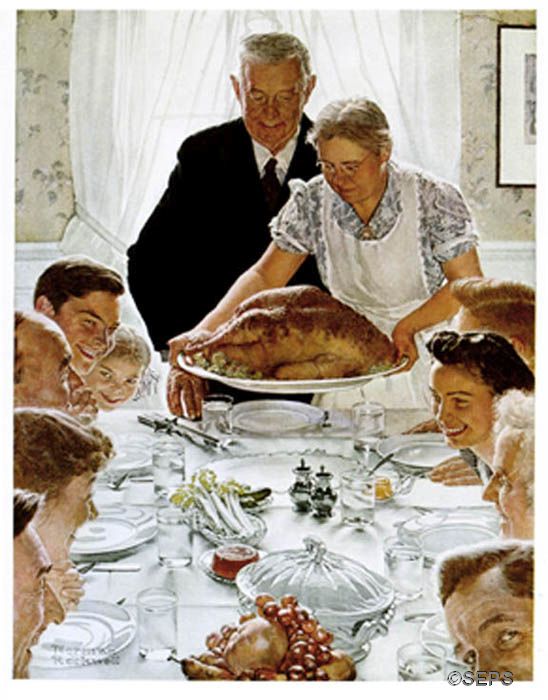
  2. Vs. the picture above 🙂

     2) Who else is on the bandwagon with you?  Ephesians 5:1-21, (emphasis on v7) says: “Therefore do not be partakers with them”,  speaking of the sons of disobedience.  For me this has meant a trunk-or-treat event or a harvest festival at church has been acceptable before God.  Trick-or-treating seems like it’s kind of neighborhood or even family dependent, see point one.  🙂 

God’s Word Rules,

Pastor Scott

The Heart – October 11, 2024

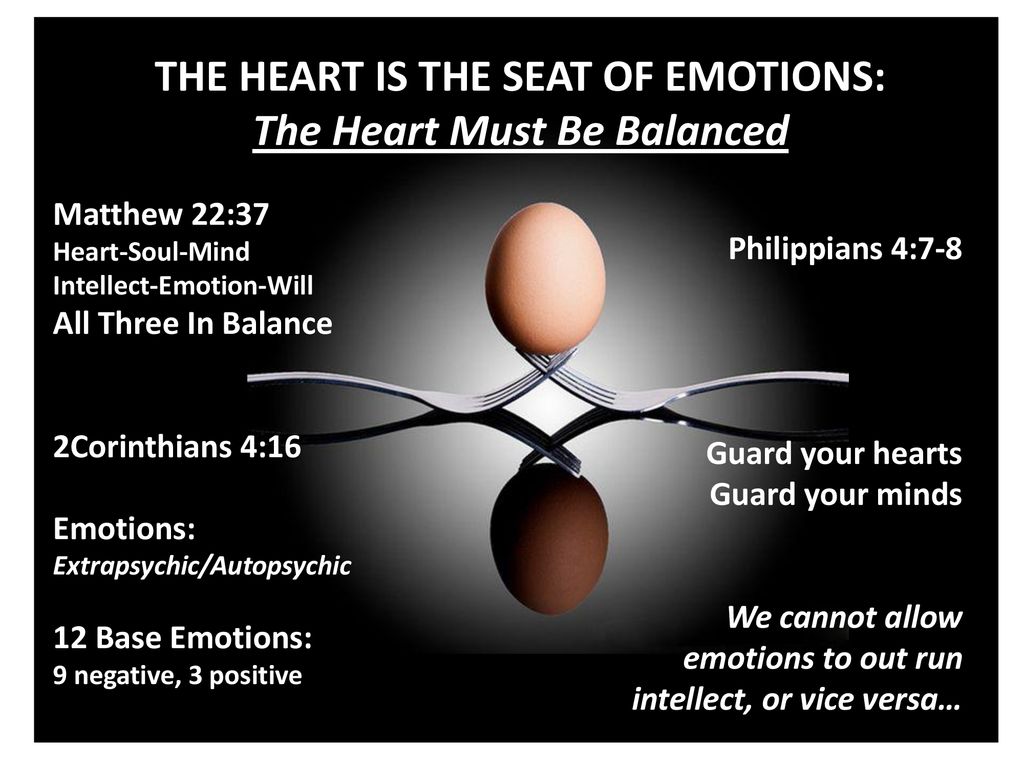
Matthew 22:37. Heart-Soul-Mind. Intellect-Emotion-Will. All Three In Balance. 2Corinthians 4:16. Emotions: Extrapsychic/Autopsychic. 12 Base Emotions: 9 negative, 3 positive. Philippians 4:7-8. Guard your hearts. Guard your minds. We cannot allow emotions to out run intellect, or vice versa…

Pastor Jim will be speaking on the New Covenant in Jeremiah 31 on Sunday, but it’s Jeremiah 17:9 that many of us remember from childhood. “The heart is deceitful above all things, and desperately wicked: who can know it?” 

If Jeremiah were writing that today he may have contradicted Obi Wan and said, “Don’t trust your feelings!”  “Your ‘feelings’ will lie to you.”  Even though I know that, I still let my feelings rule the day sometimes.  “I know this isn’t the wisest use of my time, but I don’t feel like cleaning right now.”  “I know I shouldn’t be saying this, but it feels okay at the moment.” “The Bible may say that “x” is wrong, but I feel my situation justifies it.”

You get the point. It doesn’t take long for our feelings, our heart, to take us completely away from living in God’s absolute truth.  We need to be careful.  His rule is His word, not my heart.

Pastor Scott

Discipleship Defined 10.04.24

Got this blog from GES on Wednesday Oct 2, 2024 The week the Grace Groups begin their Study of Discipleship.  I thought it was God-timing.  ~Pastor Scott  
Grace Evangelical Society

Success in Fishing Doesn’t Come Free By Kenneth Yates on Oct 02, 2024 09:30 amOne of the characteristics of Free Grace Theology is that it makes a distinction between a believer and a disciple. A believer is somebody who has believed in Jesus for eternal life. They receive it as a gift. Works play no part in it whatsoever. A disciple is a believer who follows Christ in obedience. Discipleship involves works and is not free. All believers will be in the kingdom, but not all believers are disciples.Many Bible teachers disagree. They say we must do works to prove we are saved. They maintain that all believers are disciples. There is no difference between the two.This is a strange and contradictory teaching. Those who promote it say that eternal salvation is free, then quickly add that it will cost the person everything. That makes absolutely no sense. They do this because they think verses that say eternal salvation is free and verses about the cost of being a disciple are all talking about the same thing—salvation from hell. They try to make all these verses be about the same thing.We need only look at one example to see how nonsensical such a view is. Imagine preaching that salvation is absolutely free, then saying that Mark 1:16-20 is talking about the same thing. The Lord calls four fishermen to follow Him. The word follow is a discipleship term. It is an ongoing process. The Lord wants these men to walk after Him, learn from Him, and do the things He commands them to do. Receiving eternal life is not a process. It happens in a moment of time, when the person believes in Jesus for eternal life.Clearly, Jesus is not telling these men to believe in Him. He is not offering them a gift. These men had already believed and received the gift of life (John 1:37-42). Jesus is telling them to do something more and to get to work.The call to do work is also clear in what Jesus wants them to do. He wants them to learn how to fish for men. These four men were fishermen, and they knew the kind of work involved in that business. When Jesus called them to follow Him, they were doing hard work. Some were casting nets into the sea (v 16). Others were mending broken nets and getting them ready for the next trip out into the water (v 19).Recently, I went on a trip to the coast of Georgia. I did a tourist thing where a fisherman showed us how to catch fish with a large net. I volunteered, along with another man, to give it a try. We unfolded the net and waded about thirty yards out into the water. We dragged the net for about ten minutes. We caught a bunch of small fish. After those ten minutes, I was done. I needed to take a nap.It was obvious to me that fishing takes a great deal of work. Not a single one of those men whom Jesus called that day thought, “He is calling us to do something that is absolutely free and takes no work.” They understood that the Lord was urging them to follow Him by doing hard work.Even though I have heard it a thousand times, it still baffles me when I hear people say that the Lord was telling these fishermen to believe in Him for eternal life in these verses. If those four men heard somebody say that Jesus was offering them a free gift on the Sea of Galilee that day, they would have rolled on the ground laughing.There is no doubt that Christ was calling these men to be His disciples. That is not the same thing as believing in Him. Believing costs nothing. Discipleship is very costly. It is hard work. If you try to say they are the same thing, you only look foolish.Let’s keep them separate. Receiving eternal life is given freely by God’s grace through faith alone. Being a disciple will take hard work. Go to the coast of Georgia and drag a net in the ocean for ten minutes and you’ll see. Unless your theological tradition compels you do to so, you will never say that Mark 1:16-20 is an invitation for these men to receive a gift.

Shame – September 27, 2024

Unto thee, O Lord, do I lift up my soul.  O my God, I trust in thee: let me not be ashamed, let not mine enemies triumph over me. (Psalm 25:1-2)

You may recognize these words from a Scripture memory program or from years of devotions…but if they caused you to break into song (even just in your head), you’re probably of the Maranatha Music generation!  I am of that generation and  have fond memories of waiting for their next album release and singing their songs  in Youth Group.  In fact verse 2 above is running through my head today as a catchy melody…

We don’t talk in “shame” language very much anymore.   I think it was being misused in our culture, but David recognized that any failure he had fighting God’s enemies reflected badly on God.  Our enemies are not flesh and blood and are most often manifested in us by temptations we allow to turn into sin  (Eph 6:12; James 1:13-15). Resisting temptation is a matter of walking (living) in the light of God’s presence and in fellowship with God’s people.  If I am cowering in darkness, my enemies will triumph and I will be ashamed.  I need to stay in the light, and I implore you to do the same!  Simple to say, a challenge to do 24/7 in 2024!

Praying for you as you pray for me,

Pastor Scott

“Good Sermon Illustrations” Sep 20, 2024

He said therefore, “What is the kingdom of God like? And to what shall I compare it?…”

Luke 13:18

One of the hardest things about writing sermons is coming up with good illustrations. Illustrations are important tools for communicating because they help the truth to stick in our minds. I’m always hunting for a compelling story, an article or testimony that correlates with Scripture. When I find such treasures I bookmark them for later.

But I’ve got to be careful. A good illustration is supposed to function as a window to help others see the truth more clearly. Sometimes teachers and preachers labor over them so much that they have to stretch the Scriptures to apply their story. Or they emphasize the story so much that it actually obscures the biblical text. I’ll never forget when a visiting preacher came and opened with a prolonged account, with many hilarious embellishments, of how his kids found what they thought was a human leg floating in a creek. They later found out that it was a very life-like prosthetic and had some fun scaring others with it. After about 15 minutes of this admittedly entertaining story, the preacher transitioned from a legless person to the headless horseman of European folklore. This led him to Ichabod Crane and the loose connection to 1 Samuel 4:21, “And she named the child Ichabod, saying, “The glory has departed from Israel!”” I still have no idea what the sermon was about.

Jesus was a master teacher and used illustrations all the time. He explained the kingdom of God with everyday images from farming, fishing and building. His illustrations always had a profound impact. “Now a man had two sons…” Who could forget such a story?

Jesus’ preaching ministry was supported by his healing ministry. He encountered people suffering from disease, demonic possession and even death. After healing them, casting out the demons or raising them from the dead, his ‘sermon illustration’ was right there for everyone to see. He also exhibited his power over nature. After illustrating his authority and identity by calming a dreadful storm his disciples were filled with great fear and said to one another, “Who then is this, that even the wind and the sea obey him?” (Mk. 4:41)

Every person Jesus encountered was changed by the experience. He left many living, breathing sermon illustrations in his wake that could attest to him. These transformed people then went on to persuade others about the truth of the gospel. “Now when they saw the boldness of Peter and John, and perceived that they were uneducated, common men, they were astonished. And they recognized that they had been with Jesus.” (Acts 4:13)

The world needs more good sermon illustrations. That is, people need to see in us the difference Christ makes. Someone said, “The world isn’t mad at the church because we’re different. They’re mad at us because we aren’t different enough.” Do our lives illustrate the uniqueness of the kingdom? Before people will investigate Christ, they often look to his followers. What will they see?

Scripture frequently confronts us with this challenge. In the Sermon on the Mount, Jesus calls us to a deeper righteousness (Mt. 5:20) and a perfect love (Mt. 5:48). Peter exhorts us, “as he who called you is holy, you also must be holy in all your conduct” (1 Pet. 1:15) so that “by doing good you should put to silence the ignorance of foolish people.” (1 Pet. 2:15) Unbelievers look for fault. They read us more than they read their Bibles. Peter’s admonition is to take those accusations out of their mouths by living lives above reproach.

Our hymns for worship also remind us of this sober responsibility. “We are the only Bible the careless world will read… We are the Lord’s last message, given in deed and word; What if the type is crooked? What if the print is blurred?” The world needs good sermon illustrations. Are you one?

I, Pastor Scott, did not write this, but found this unattributed on the internet.  I suspect the writer posted it on his church’s website and then it got copied and re-posted.. 

Priorities – 09.13.2024

When I get caught up in delivering a message (or the details of a picnic), I often leave out written illustrations or quotes I had intended to share during the message.  These two are so poignant I thought they were worth printing here.

On Sunday, I made mention of the casualness with which the people of Judah were approaching Temple worship.  It was so bad that God called their offering worthless and their mere presence in the Temple a “trampling of My courts” (Is 1:12).  It was in light of this irreverence that God showed His prophet WHO He was (Is 6).  

The two quotations below, which may be familiar to some readers; are both calls to be less casual about God and our relationship with Him!   ~Blessings, Pastor Scott

“Christianity, if false, is of no importance, and if true, of infinite importance, the only thing it cannot be is moderately important.”

C.S. Lewis

“What comes into our minds when we think about God is the most important thing about us…..Worship is pure or base as the worshiper entertains high or low thoughts of God.  For this reason the gravest question before the Church is always God Himself, and the most portentous fact about any man is not what he at a given time may say or do, but what he in his deep heart conceives God to be like. We tend by a secret law of the soul to move toward our mental image of God. This is true not only of the individual Christian, but of the company of Christians that composes the Church. Always the most revealing thing about the Church is her idea of God, just as her most significant message is what she says about Him or leaves unsaid, for her silence is often more eloquent than her speech. …”

A.W. Tozer (The Knowledge of the Holy)

Next Month’s Bread – August 30, 2024

Sometimes you run across a quotation that hits you right between the eyes…  Pastor Scott

“A more Christian attitude, which can be attained at any age, is that of leaving futurity in God’s hands. We may as well, for God will certainly retain it whether we leave it to him or not. Never, in peace or war, commit your virtue or your happiness to the future.

Happy work is best done by the man who takes his long-term plans somewhat lightly and works from moment to moment ‘as to the Lord’. It is only our daily bread that we are encouraged to ask for. The present is the only time in which any duty can be done or any grace received.”

CS Lewis, The Weight Of Glory

“‘Therefore I tell you, do not be anxious about your life, what you will eat or what you will drink, nor about your body, what you will put on. Is not life more than food, and the body more than clothing?

Look at the birds of the air: they neither sow nor reap nor gather into barns, and yet your heavenly Father feeds them. Are you not of more value than they? And which of you by being anxious can add a single hour to his span of life? And why are you anxious about clothing? Consider the lilies of the field, how they grow: they neither toil nor spin, yet I tell you, even Solomon in all his glory was not arrayed like one of these.

But if God so clothes the grass of the field, which today is alive and tomorrow is thrown into the oven, will he not much more clothe you, O you of little faith? Therefore do not be anxious, saying, ‘What shall we eat?’ or ‘What shall we drink?’ or ‘What shall we wear?’ For the Gentiles seek after all these things, and your heavenly Father knows that you need them all. But seek first the kingdom of God and his righteousness, and all these things will be added to you.

‘Therefore do not be anxious about tomorrow, for tomorrow will be anxious for itself. Sufficient for the day is its own trouble.’”

Matthew 6:25-34

The Shield-wall of Faith – Aug 23, 2024

A Roman Shield Wall Reenactment

Our elder emeritus and long-time Bible teacher, Dr. Biery, often shares a story of covering a brother’s weakness.  I was reminded of that when I came across this illustration of 1 Corinthians 13:7    ”[love] …bears all things, believes all things, hopes all things, endures all things.”

In a Leadership profile of pastor and author Stu Weber, Dave Goetz writes:

Growing up, Weber developed a temper, which blossomed in high school and college. “And then I went into the military,” Weber said, “which doesn’t do a lot to curb your temper and develop relational skills.  “Early in his ministry, he stopped playing church-league basketball altogether; his temper kept flaring, embarrassing himself and the church. A decade passed. “I hadn’t had a flash of temper for years,” Weber said. “I thought, the Lord has been good. I’m actually growing.”

Then his oldest son made the high school varsity basketball squad. “I began living my life again through my son.” Weber terrorized the referees. On one occasion, seated in the second row, Weber wound up on the floor level, with no recollection of how he got there. He received nasty letters from church members, who, he says now, “were absolutely right on.”

But then he got another note: “Stu, I know your heart. I know that’s not you. I know that you want to live for Christ and his reputation. And I know that’s not happened at these ballgames. If it would be helpful to you, I’d come to the games with you and sit beside you.”

It was from one of his accountability partners.

“Steve saved my life,” Weber said. “It was an invitation, a gracious extension of truth. He assumed the best and believed in me.”

When we love others, we believe in and hope the best for them even when they fail.

John defines “love of the world” as the 1) the lust of the flesh; 2) the lust of the eyes, and 3) the boastful pride of life.  I’ve always believed that an aspect of the pride of life is not just in boasting but in wishing the worst on others (ie. “rejoicing in unrighteousness – 1 Cor. 13:6a).   As we seek to love each other as Christ loved us, part of that love is to help each other across the finish line NOT to secretly hope someone fails – that’s not love that’s the boastful pride of life!  ~ Pastor Scott

Christian Preppers  – August 16, 2024

In the first of Paul’s pastoral epistles he warns Timothy of a coming apostasy that will creep into the church* and then he says, to Timothy:

“In pointing out these things to the brethren, you will be a good servant of Christ Jesus, constantly nourished on the words of the faith and of the sound doctrine which you have been following.  But have nothing to do with worldly fables fit only for old women. On the other hand, discipline yourself for the purpose of godliness;  for bodily discipline is only of little profit, but godliness is profitable for all things, since it holds promise for the present life and also for the life to come.  It is a trustworthy statement deserving full acceptance.  For it is for this we labor and strive, because we have fixed our hope on the living God, who is the Savior of all men, especially of believers.” – 1 Timothy 4:6-10

It’s instructive to me that despite the collapse of the church and/or state that Paul is prophesying, his word to us is, “keep on keeping on.”  Ignore the stories (Gossip? Politics? Conspiracy theories?) and keep up your discipline.  Not to earn the salvation that Jesus bought for us, but so as to be godly enough for Him to use as we fix our hope, not on an election or a human fix, but on the living God!

Paul’s mention of athletic discipline reminds us that if we don’t use it, we will lose it!  So yes we should be taking care of our bodies but even more importantly we should be taking care of our souls!  

Richard Foster’s Twelve Disciplines** (see below) are all drawn from Scripture, but I don’t see it as a checklist (we should feel free to add, subtract and recombine).  It’s good to be reminded there are things we can do everyday that will strengthen our hearts toward God.

  • Inward disciplines: meditation, prayer, fasting, and study.
  • Outward disciplines: simplicity, solitude, submission, and service.
  • Corporate disciplines: confession, worship, guidance, and celebration. 

Something to think about!

Pastor Scott

*I believe the warnings in 1 Timothy have been a consistent plague on the Church down through the ages.  God purges and the process starts again, but one of these times it will be the last time and it sure feels like that could be soon!

**I have to give Foster credit for this biblical list.  However, I also have a “check in my spirit.”  Galatians 3 warns us how the Galatian believers thought their sanctification was dependent on their hard work and Paul said, no, that God was the One through whom we would be made perfect.  Foster’s book gives an alternative impression.