By-Law Query 9.11.20

Sunday (9/6/2020) I touched on our doctrinal statement, which led someone to do a little research that resulted in an email question that happens to be recurrent about our form of church government: here’s a copy of my “Pastor’s Pen” from February 2010 in answer to his question; also for the reader’s edification and or information! 🙂

Why are we a congregational church rather than an elder-led church?  My sister says there’s no scriptural support for that model.  What gives???

Too Nit-Picky?

Letter to the Pastor c. January 2010

Dear Nit-Picker,

That’s sort of like asking, “Pastor Scott, how can you say you’re Swedish when we can all see you are a Caucasian?” 🙂  We are legally or technically a congregational church and we are actually an Elder-led church.  Let me see if I can explain.

There are three generally (legally?) recognized forms of church polity.  They are (according to Theopikea):

EpiscopalChurches having Episcopal polity are governed by bishops. The title bishop comes from the Greek word episkopos, which literally translates into overseer. In regard to Catholicism, bishops have authority over the diocese, which is both sacramental and political; as well as performing ordinations, confirmations, and consecrations, the bishop supervises the clergy of the diocese and represents the diocese both secularly and in the hierarchy of church governance.  Bishops in this system may be subject to higher ranking bishops (variously called archbishops, metropolitans, and/or patriarchs, depending upon the tradition; They also meet in councils or synods. These synods, subject to presidency by higher ranking bishops, may govern the dioceses which are represented in the council, though the synod may also be purely advisory.

Presbyterian meaning “Elder-led.” Many Reformed churches, notably those in the Presbyterian and Continental Reformed traditions, are governed by a hierarchy of councils. The lowest level council governs a single local church and is called the session or consistory; its members are called elders. The minister of the church (sometimes referred to as a teaching elder) is a member of and presides over the session; lay representatives (ruling elders or, informally, just elders) are elected by the congregation. The session sends representatives to the next level higher council, called the presbytery or classis. In some Presbyterian churches there are higher level councils (synods and/or general assemblies). Each council has authority over its constituents, and the representatives at each level are expected to use their own judgment. Hence higher level councils act as courts of appeal for church trials and disputes, and it is not uncommon to see rulings and decisions overturned.

CongregationalCongregationalist polity dispenses with titled positions such as bishop as a requirement of church structure. The local congregation rules itself, though local leaders and councils may be appointed.  Members may be sent from the congregation to associations that are sometimes identified with the church bodies formed by Lutherans, Presbyterians, Anglicans, and other non-congregational Protestants. The similarity is deceptive, however, because the Congregationalist associations do not exercise control over their members (other than ending their membership in the association). Many Congregationalist churches are completely independent in principle. One major exception is Ordination, where even congregationalist churches often invite members of the vicinage or association to ordain their called pastor.  It is a principle of congregationalism that ministers do not govern congregations by themselves. They may preside over the congregation, but it is the congregation which exerts its authority in the end.  Congregational polity is sometimes called “Baptist polity”, as it is the characteristic polity of Baptist churches.

I wasn’t even born when Blue Ridge incorporated, but as I understand it we (they) had three choices.  We (they) strongly believed that our church should be self-governed and therefore we are, by definition, a congregational church.  And I would bet my left lung, if I were a betting man, that your sister’s church is “congregational” too, at least according to the definitions above.

By now I trust the reader is wondering how it is that I can say we are a Congregational/Elder-led church.  Let’s start by looking at some definitions in scripture:

In Acts 6 we have the story of the Apostles (who were serving as the Elders/Overseers of the one and only church at that time) being bombarded by service requests.  Their response was to tell the congregation to go choose seven men, filled with the Holy Spirit, to serve the Apostles as deacons (ministers, servants).  In one passage you have the establishment of congregational polity and the office of deacon.

Later, as the church grew Elders were established.  We first see it in Acts 14:23 – “When they had appointed elders for them in every church, having prayed with fasting, they commended them to the Lord in whom they had believed.”   The word isn’t really explained since there we always Elders in Israel.  But it’s interesting to note that the word “Elder” is plural and the word “Church” is singular.  Notice James 5:14 – “Is anyone among you sick? Then he must call for the elders of the church and they are to pray over him, anointing him with oil in the name of the Lord;”  or 1 Peter 5:1 “Therefore, I exhort the elders among you, as your fellow elder and witness of the sufferings of Christ, and a partaker also of the glory that is to be revealed,”  It seems pretty clear to me that every church has a plurality of Elders, but what about the Bishops?  Are they in Scripture as well?

As mentioned in the article above, the Greek word is Episkopos and it is translated “Overseer” and transliterated as “Bishop.”  It is only used in the Pastoral Epistles.  We see it in 1 Timothy 3:1-2 – “It is a trustworthy statement: if any man aspires to the office of overseer, it is a fine work he desires to do.  An overseer, then, must be above reproach,….”  The office of overseer seems to come from out of the blue here, except that in chapter five he starts talking about “Elders who rule well” which gives us a hint that he might be using the word Elder and Bishop interchangeably.  This hint is confirmed in Titus when he gives Titus the same instruction:  “For this reason I left you in Crete, that you would set in order what remains and appoint elders in every city as I directed you, namely, if any man is above reproach, the husband of one wife, having children who believe, not accused of dissipation or rebellion.  For the overseer must be above reproach as God’s steward, not self-willed, not quick-tempered, not addicted to wine, not pugnacious, not fond of sordid gain,”   Elders are Overseers (Bishops) and Overseers are Elders.  At least in the Bible, but not in “the church.”

The Church that became the RC saw Paul referring to the office, singular, of Overseer – Bishop they also saw (or some would argue, inherited) a system whereby individual men already had a lot of power.  For all that they claim Peter was the first pope, it was James (Acts 15) that headed the council at Jerusalem, to whom Paul, the overseer of all gentile churches, reported.  In the same way Paul then seems to oversee Timothy and Titus, heads of the churches in Ephesus and in Crete.   I truly see a plurality of Elders, but it’s not hard to see how the Bishoprics got started.

That brings us to the reformation.  Calvin and Knox agree with me about the plurality of Elders but they still thought in terms of church hierarchy.  So you have councils Elders reporting to Councils of Elders (Presbyterianism).  Still others in the reform movement determined to place the authority in the local church movement and thus Congregationalism was formed.

We are a Bible Church.  Our movement was born just 100 years ago when many of the mainline denominations started to slip away from Fundamental Doctrines of the Faith.  Many of our parent denominations were Hierarchical in nature and we wanted nothing to do with that so we (along with most evangelical/fundamental churches) chose to keep our churches autonomous and therefore congregational.  We believe in a plurality of Elders and our bylaws do affirm that the Elders oversee EVERYTHING.  However, in keeping with the fact that the church (the body) is autonomous  the congregation still votes on (ratifies) things like the hiring of a new senior pastor, the annual budget and our deacons and our elders.  It’s really a model of the republic and some have called our model the federated model.

And that’s probably waaay more than you wanted to know.

In Christ,

Pastor Scott

Hearing God – Sept 4, 2020

I received an email this week from a spiritual sib who has struggled for a long time with this question: “We know God hears prayer. But that is one-way conversation. How do believers receive answers from the Lord? It is too easy to say, ‘I felt the Lord’s leading,’ or something similar. This is very subjective. Is there an objective answer?”

This is a great question! “How do we sense the Lord’s leading?”  First, let me tackle NT prayer in case I’m missing the point.

I would suggest that the way Jesus taught us to pray, and modeled prayer, was to ask for specifics and allow God to answer through fulfillment. (Give us this day our daily bread, forgive us our debt…. Remove this cup from me.)  As I search my mind (so this isn’t an exhaustive list), I can only think of a couple of biblical instances where prayer was about choosing.  In Acts 1, the eleven remaining disciples prayed that God would reveal Judas’ replacement, then they drew lots between Barsabbas (who was also called Justus) and Matthias.  In Acts 15, Paul forced a choice on the council of Apostles when he used persuasion and the Holy Spirit reminded James of OT prophecy.  In Acts 16, God used a vision to send Paul toward Macedonia after the Holy Spirit had prohibited him from entering Asia and going to Bithynia.  These exceptions aside, most recorded prayers are for God to act more than for receiving answers. 

In Acts 16, Luke records pretty direct intervention by the Holy Spirit.  However, in much of Acts, and in Paul’s recounting of his life in his letters, you have a picture of a man walking in the Spirit and in wisdom.  Scripture gives us some objective parameters, and my belief and experience is that if we walk in them, in the same way we stay in our lanes as we drive, we are being led of the Lord!

  1. We are instructed to walk in the Spirit as opposed to fleshly lust. (Galatians 5:16)
  2. The Spirit is never going to lead us to violate the Word He wrote (1 Peter 1:21)
  3. Don’t violate your conscience. (Romans 14:23)
  4. Don’t avoid something you know to be right. (James 4:17; 1 Thessalonians 5:19)
  5. Align your life (your time) according to God’s priorities. (Ephesians 5:15-17)
    • The Gospel
    • Family
    • Job
    • Loving others
  6. Make God’s glory your #1 priority! (1 Corinthians 10:31)

Now, having a clean conscience, decide and trust the God of the universe to lead, through prompting (1 Thessalonians 4:19) or closed doors (Acts 16:7) or even your wisdom and experience.

Blessings,

Pastor Scott

P.S.  “Simple” is not the same as “easy,” especially given that our flesh, this world, and the adversary are all working against us.  So start each day in the Word and continue each day walking as closely to Him as possible!  For example, I like to pick a song or a verse I can rehearse. (Psalm 1:2)

How to Pray for the Upcoming Election

by Guest Blogger Dave Butts via reviveourhearts.com

In Paul’s teaching on prayer in 1 Timothy 2:1–4, one of the major thrusts is praying for those in authority. According to Paul’s reasoning, we want good government that allows us to live “peaceful and quiet lives”—ultimately freeing us to evangelize those who are lost.

Paul would have been amazed that Christians could someday actually take part in selecting those leaders. I believe he would have been even more amazed (and appalled) that many of those Christians didn’t even bother to get involved in selecting those leaders for the purposes of God to be fulfilled.

Praying for the electoral process is the first step in seeing the fulfillment of what Paul is writing about to Timothy. I don’t believe we should wait for a leader to be selected before we move into obedient prayer for those in authority. In prayer, we invite the Lord into the process of electing those leaders who will ultimately allow us to lead “peaceful and quiet lives in all godliness and holiness” (v. 2).

So why pray for the elections? There are a number of compelling reasons:

  • The Bible commands us to pray for those who are in leadership, which would include those who are vying to become leaders.
  • Godly leaders can help slow the erosion of religious liberties in our land, providing an increased window of opportunity for the Church to pray and evangelize.
  • The selection of leaders who understand and lead according to God’s righteous standards can bring great blessing to a nation (Prov. 14:34).
  • Scripture also says, “For lack of guidance a nation falls, but victory is won through many advisers” (Prov. 11:14). The determination of who leads our nation will also determine who advises that leader and how we are guided.

Praying for Our Nation, the Elections, and the Church

The following prayer points cover seven major areas that relate to our national elections.

1. Our Nation and the Issues It Faces

  • Pray for the judges of this nation, that they will seek the wisdom that comes from above. “But the wisdom that comes from heaven is first of all pure; then peace-loving, considerate, submissive, full of mercy and good fruit, impartial and sincere” (James 3:17).

  • Ask the Lord to thwart the efforts of those who would remove religious freedom from our nation. “It is for freedom that Christ has set us free. Stand firm, then, and do not let yourselves be burdened again by a yoke of slavery” (Gal. 5:1).

  • Pray for truth to become valued again in American society. “Then you will know the truth, and the truth will set you free” (John 8:32).

  • Pray that our nation will increasingly see that God is our only refuge in the midst of the troubles of this world. “God is our refuge and strength, an ever-present help in trouble” (Ps. 46:1).

  • Pray for our judicial system and lawmakers—that justice for all, tempered by mercy and compassion, will guide our nation. “This is what the Lord Almighty said: ‘Administer true justice; show mercy and compassion to one another'” (Zech. 7:9).

  • Repent on behalf of our nation, because we have turned from making Scripture the basis of law, leaving behind wisdom and instead, looking to ourselves for truth. “We all, like sheep, have gone astray, each of us has turned to our own way; and the Lord has laid on him the iniquity of us all” (Isa. 53:6).

  • Ask the Lord to pour out a spirit of repentance on our nation, that we might become a nation committed to following His ways. “You will seek me and find me when you seek me with all your heart” (Jer. 29:13).

  • Pray that the United States will repent of its corporate rejection of the Word of God as the basis of law. “How long will you who are simple love your simple ways? How long will mockers delight in mockery and fools hate knowledge? Repent at my rebuke! Then I will pour out my thoughts to you, I will make known to you my teachings” (Prov. 1:22–23).

  • Pray that a holy fear of God will sweep across our nation, leading us back to a place of wisdom and walking in the Lord. “Who among you fears the Lord and obeys the word of his servant? Let the one who walks in the dark, who has no light, trust in the name of the Lord and rely on their God” (Isa. 50:10).

2. The Election Process

  • Pray for wisdom for voters and a safe and fair election. “My son, do not let wisdom and understanding out of your sight, preserve sound judgment and discretion; they will be life for you, an ornament to grace your neck. Then you will go on your way in safety, and your foot will not stumble” (Prov. 3:21–23).
  • Ask the Lord to remove those who might try to unjustly and illegally change the outcome of the voting. “I will make justice the measuring line and righteousness the plumb line; hail will sweep away your refuge, the lie, and water will overflow your hiding place” (Isa. 28:17).
  • Pray for a huge turnout of voters who use wisdom in their decisions. “Get wisdom, get understanding; do not forget my words or turn away from them. Do not forsake wisdom, and she will protect you; love her, and she will watch over you” (Prov. 4:5–6).
  • Pray for protection from any attacks from enemies that would prevent or delay the election. “Do not be afraid of them; the Lord your God himself will fight for you” (Deut. 3:22).

3. Candidates and Leaders

  • Pray for the salvation of those who are in leadership of our nation. Ask the Lord to remove all envy and selfish ambition. “For where you have envy and selfish ambition, there you find disorder and every evil practice” (James 3:16).
  • Pray that candidates will take brave stands for righteousness, even when it may not be well received. “If you do not stand firm in your faith, you will not stand at all” (Isa. 7:9).
  • Pray that their families will be protected from harm and unnecessary scrutiny. “You, Lord, will keep the needy safe and will protect us forever from the wicked, who freely strut about when what is vile is honored by the human race” (Ps. 12:7–8).
  • Ask the Lord to surround them with godly advisors. “The fear of the Lord is the beginning of wisdom; all who follow his precepts have good understanding. To him belongs eternal praise” (Ps. 111:10).
  • Pray that each candidate will focus on the issues we face as a nation—and not on personal attacks on other candidates. “If you bite and devour each other, watch out or you will be destroyed by each other” (Gal. 5:15).

4. The Church

  • Pray for a spirit of humility in the Church and an outreach toward those whom the Bible calls the least among us. “The King will reply, ‘Truly I tell you, whatever you did for one of the least of these brothers and sisters of mine, you did for me'” (Matt. 25:40).
  • Pray that the churches in your community and area will preach the gospel of Christ powerfully. “For I am not ashamed of the gospel, because it is the power of God that brings salvation to everyone who believes: first to the Jew, then to the Gentile” (Rom. 1:16).
  • Thank the Lord for the freedom we have in Him and for the wisdom to understand that freedom. “You, my brothers and sisters, were called to be free. But do not use your freedom to indulge the flesh; rather, serve one another humbly in love” (Gal. 5:13).
  • Pray for a spirit of consecration and holiness to come upon the Church in America. “But just as he who called you is holy, so be holy in all you do” (1 Peter 1:15).
  • Pray for a spirit of compassion to come over the Church in this nation so that we will begin seriously to live out the lifestyle of Jesus in our communities. “Therefore if you have any encouragement from being united with Christ, if any comfort from his love, if any common sharing in the Spirit, if any tenderness and compassion, then make my joy complete by being like-minded, having the same love, being one in spirit and of one mind. Do nothing out of selfish ambition or vain conceit. Rather, in humility value others above yourselves, not looking to your own interests but each of you to the interests of the others” (Phil. 2:1–4).
  • Ask the Lord to help strengthen the trumpet call to intensive prayer, so that it is heard throughout the Church in the United States. “Therefore I want the men everywhere to pray, lifting up holy hands without anger or disputing” (1 Tim. 2:8).
  • Ask the Lord to equip the Church to rise up with a strong prophetic voice for America. “Pray also for me, that whenever I speak, words may be given me so that I will fearlessly make known the mystery of the gospel” (Eph. 6:19).
  • Pray for a spirit of repentance to fall upon the Church in America that would cause believers to turn back to God and seek Him. “God looks down from heaven on all mankind to see if there are any who understand, any who seek God” (Ps. 53:2).
  • Pray for a spirit of courage to rise up within the Church, a commitment to enduring whatever it takes to see the fulfillment of God’s purposes in our nation. “Be on your guard; stand firm in the faith; be courageous; be strong” (1 Cor. 16:13).
  • Pray that the Church in America will so noticeably live in Christ’s peace that His peace comes into the councils of our nation. “Let the peace of Christ rule in your hearts, since as members of one body you were called to peace. And be thankful” (Col. 3:15).
  • Pray for a movement of the Spirit that creates a dramatic cultural transformation in the United States, bringing about a nation that has learned to put its hope in the Word of God. “Do not conform to the pattern of this world, but be transformed by the renewing of your mind. Then you will be able to test and approve what God’s will is-his good, pleasing and perfect will” (Rom. 12:2).
  • Ask the Lord to awaken the Church to the temporary nature of the nations and to the eternal nature of the reign of God. “But the wicked will perish: Though the Lord’s enemies are like the flowers of the field, they will be consumed, they will go up in smoke” (Ps. 37:20).
  • Pray that courage born of wisdom will be given to Christians in places of leadership in government, the courts, and law schools across the nation so that they will stand for a godly basis for law. “Have I not commanded you? Be strong and courageous. Do not be afraid; do not be discouraged, for the Lord your God will be with you wherever you go” (Josh. 1:9).

5. Media

  • Pray for truth to be an established standard in our news media. “In your majesty ride forth victoriously in the cause of truth, humility and justice; let your right hand achieve awesome deeds” (Ps. 45:4).
  • Pray that media bias will be replaced by fairness. “The King is mighty, he loves justice-you have established equity; in Jacob you have done what is just and right” (Ps. 99:4).
  • Ask that Christianity will receive fair coverage in all reports. “Have I not written thirty sayings for you, sayings of counsel and knowledge, teaching you to be honest and to speak the truth, so that you bring back truthful reports to those you serve?” (Prov. 22:20–21).

6. Spiritual Warfare

  • Ask for great awareness and discernment as we pray over the election. “Be very careful, then, how you live-not as unwise but as wise, making the most of every opportunity, because the days are evil. Therefore do not be foolish, but understand what the Lord’s will is” (Eph. 5:15–17).
  • Pray for physical protection for all candidates and their families throughout this campaign season. “May the Lord answer you when you are in distress; may the name of the God of Jacob protect you” (Ps. 20:1).
  • Beseech the Lord for a strong hedge of protection around the nation itself during this time of decision. “May your unfailing love be with us, Lord, even as we put our hope in you” (Ps. 33:22).

7. Revival

  • Pray for another Great Awakening to sweep the nation as the Lord’s people learn to humble themselves with a contrite spirit, and to tremble at the Word of the Lord. “‘Has not my hand made all these things, and so they came into being?’ declares the Lord. ‘These are the ones I look on with favor: those who are humble and contrite in spirit, and who tremble at my word'” (Isa. 66:2).
  • Ask the Lord to bring revival to the Church in America. “Oh, that you would rend the heavens and come down, that the mountains would tremble before you! As when fire sets twigs ablaze and causes water to boil, come down to make your name known to your enemies and cause the nations to quake before you! For when you did awesome things that we did not expect, you came down, and the mountains trembled before you. Since ancient times no one has heard, no ear has perceived, no eye has seen any God besides you, who acts on behalf of those who wait for him” (Isa. 64:1–4).
  • Pray for the preachers of America to fearlessly proclaim the Word of God regarding sin and God’s love. “In the presence of God and of Christ Jesus, who will judge the living and the dead, and in view of his appearing and his kingdom, I give you this charge: Preach the word; be prepared in season and out of season; correct, rebuke and encourage-with great patience and careful instruction. For the time will come when people will not put up with sound doctrine. Instead, to suit their own desires, they will gather around them a great number of teachers to say what their itching ears want to hear” (2 Tim. 4:1–3).

Amen Is Not the End

Prayer rarely stops after the “amen.” When we passionately cry out to God over any issue, we should, with integrity, also find ourselves praying, “and Lord, if there is any way You can use me to be an answer to this prayer, here I am.” When we pray for an election, simple honesty will then require us to follow up our prayer by actually voting.

What about broadening the prayer effort beyond your own prayers? Why not start a short-term prayer gathering in your home for the thirty or forty days before the election? Invite friends or those with similar passion to join you each week for a focused prayer meeting that asks God to intervene in our electoral process.

In a country with nearly 350 million people, it is very easy to feel as though one person is incapable of making a difference. That is false on many levels, particularly when we consider the power of prayer.

As we pray—even as one solitary person—we are teaming up with the Creator of the universe to change situations. The only way that positive change is not possible is when Christians refuse to pray!

Adapted from With One Cry by David Butts (PrayerShop Publishing © 2016). Used by permission. You can order either the booklet or book at PrayerShop.org.

One Day at A Time – 8/14/2020

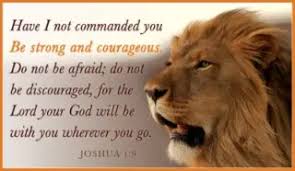
lion joushuaI don’t know what you’re trudging through today!  Maybe it’s the daily grind of news, job, bills and chores.  Maybe you are also bearing chronic pain, grief or family drama (or all of the above).  Maybe you see the growing darkness and worry or even fear what’s lies ahead.  Not that’s it’s much comfort, but I have week’s like that too.  And this week has been one.  This week the verse that’s been running through my mind, the verse that brought me back into the office after being home sick for a couple of days was 1 Corinthians 16:13.  A single line Paul wrote to a Church after he has thoroughly taken them to the woodshed.  He says very simply and very directly:
Be on the alert, stand firm in the faith, act like men, be strong. (NASB)

If it was time 1900 years ago for them to stand and be courageous in their faith; it’s time for us to be strong and courageous in ours today & everyday!  Men, let’s  ac-quit ourselves accordingly!

Pastor Scott

Questions and Answers – 8/7/2020

On Sunday (August 2) I ended my sermon by listing the 5 named crowns in the New Testament.  On Monday or Tuesday I got the question below via FB messenger.  My answer is brief and leaves a lot to be desired – whole books have been written on this topic – but like the questioner; this may be an area you are interested in or would like to “study out” and this little “Q&A” might get you started:

Hi Pastor Scott, I just wanted to thank you for talking about the 5 crowns at the end of your sermon Sunday. I wanted to ask a question on the text line, but couldn’t stop watching FB on my phone to text the question or the sermon would stop talking. And I couldn’t firm just one question so quickly either since it was at the end of the sermon. So I didn’t text it. But I was just studying those 5 crowns in my mini study on Heaven, when I borrowed your books about heaven 2 weeks ago. My question is about the crowns (or reward), what is the reward? Is it being recognized publicly in heaven in front of others who didn’t get that award? Would that not create sadness or regret in others? What bible verses would shed more light on this if any? Or a reward is different then a public award. It might be some kind of leadership honor or a privileged job to do for God? Or to have a crown to place at the king of king’s feet. This is such an odd concept to me. If Christ is the king of Kings why would we get a crown? I realize I’m treading into speculation area probably, but I just wonder what do we know about it. Should these crowns motivate us into righteousness and perseverance? Like doing good works to receive a crown? Is that prideful to be on a quest to win that reward? Or is it a reward we shouldn’t Pursue? I have heard so little about this before. Should we take this more seriously and even let it guide us and how we live and do ministry? I guess the question is how do we apply these passages to our life now? Sorry to think out loud and be so analytical, I hope you have time to play 20 questions. Lol. If you could point me in the right direction to study it out I would appreciate it.

I also wondered if any of the rewards mentioned in parables would line up with these passages.  Just Wondering.

Dear Wondering,

Let me handle your overarching question first. “Shouldn’t love of God and gratitude for His grace gift to us be enough to motivate us?” Yes, of course! There is nothing we shouldn’t be willing to do for God! But God is like a parent, He not only blessed us with Eternal Life but He wants to reward us for a life well lived.

The challenge is that the teaching about kingdom rewards are sprinkled all over scripture. They are referred to as “Blessings” (Matthew 5:3-12); as money (Matthew 25:14-46); as “place” (Matthew 18:1-4) as responsibility (Matthew 13:12) and of course crowns to throw at His feet! (Revelation 4:10).

In 1 Corinthians 9:24-27 Paul reminds us that he is running hard after his crown. In 1 Corinthians 6 he reminds believers that they are one day going to judge Angels. In chapter 3 he talks about how their works are going to be judged. We don’t know if any of these will be public, but I don’t think keeping our self-esteem up is God’s primary concern. That’s a humanist thing that has come along since Dr. Spock (not Star Trek; the Child Psychologist).

It’s not clear if they are all the same thing using different terms or if there is a huge variety of rewards awaiting us in the Kingdom.

It’s clear that some believer’s will suffer loss upon admission. (1 Cor 3:15)

It’s not wrong to have multiple motivations. You can Love your job (Teacher, nurse, pastor) and still take home a paycheck.  A worker is worthy of his wages.

Pastor Scott

We Will Not Bow!  – July 31, 2020

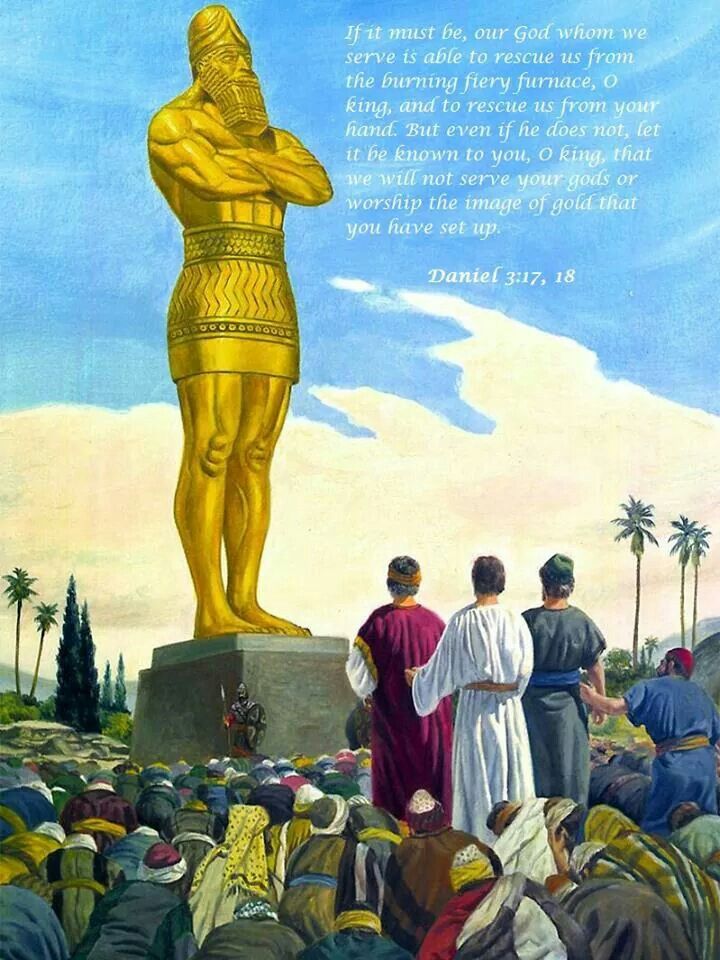
d1c3ed376d56072e574fb07f82f93287After Pentecost; and before the calling of the first deacons, the apostles were street preachers and in constant conflict with the Pharisees. Gamaliel, Paul’s teacher, convinced the council not to martyr them but just to beat them.  Acts 5 ends with these words:  They took his advice; and after calling the apostles in, they flogged them and ordered them not to speak in the name of Jesus, and then released them. So they went on their way from the presence of the Council, rejoicing that they had been considered worthy to suffer shame for His name. The Apostles were civilly disobedient for the sake of the Gospel.  Daniel and his friends were civilly disobedient when it came to false worship.   God may, in our lifetime, ask us to stand against our own government as individuals or as a Church.  I’m prepared, for instance, to preach the truth even if it’s forbidden.  I pray you are all in it until the end as well.

I know that some of you feel that the measures taken to prevent the spread of the COVID-19 virus are baby steps against that day.  Others of you feel that it’s a health department fighting something truly deadly and novel.  Please know that as your pastor I’m not blind to either “side.”  I appreciate both concerns.  I will comply with the mask order because, as it currently stands, it’s not a moral compromise and may help.  When/if it crosses the line (i.e. calls out churches separately), we will stand opposed.  Until then, we will “pay the poll tax” (Luke 17:24ff) and make clear face-shields* available for those who have medical issues with the mask or are just plain claustrophobic. 

YBIC, 

Pastor Scott

 *I have an email from Jackson County Health Department approving this plan.  🙂

Good Read! July 24, 2020

I found rightly-dividing-word-truththis article when poking around articles and blogs surrounding the tragic death of Pastor John Powell (BRCS Class of 2001).  Because I don’t run in SBC Circles I’ve never heard of Herman Ridderbos, but I think he’s right on!  Much of this is “inside baseball” preacher to preacher talk; but the first two paragraphs are well worth the read and clarify well the position of WOGF!  ~Pastor Scott

Right application of Scripture necessitates Herman Ridderbos’s famous insight into Paul’s theology. Every imperative of Scripture (what we are to do for God) rests on the indicative (who we are in our relationship with God), and the order is not reversible (Acts 16:14–16; Col. 3:1–5; 1 John 5:1–5).[i] The human instinct with every non-Christian religion reverses the order, teaching that who we are before God is based on what we do for God. Thus, any preaching that is distinctively Christian must keep listeners from confusing, or inverting, our “who” and our “do.”

What Christians do is based on who we are in Christ. We obey because God has loved us and united us to himself by his Son; we are not united to God, nor do we make him love us, because we have obeyed him. Our obedience is a response to his love, not a purchase of it. We keep this indicative-imperative relationship clear, not by when we happen to mention each element in a sermon, but by making sure that the message is not done until listeners are motivated to obey God based upon God’s gracious provision for them.

Sometimes, we’ll lay a foundation of God’s provision as a motivational basis for the imperatives that follow; other times, we’ll detail the clear duties of the text before explaining the relationship with God that enables our obedience. There is a conceptual priority on the indicative that motivates and enables obedience, even if the imperatives follow in the actual presentation of the sermon.

If we try to establish a standard order or proportion for the mention of the imperatives and indicatives in our sermons, we will inevitably end up twisting texts in ways not intended by the original authors. We certainly should mention the imperatives and indicatives in various orders or proportions in different sermons according to the content and context of each biblical text. Still, the key to making any message gospel-consistent is making sure listeners do not walk away with the sense that their behavior is the basis of their redemption.

A sermon is not a sermon, if it includes no imperatives; a sermon without application is mere abstraction. But a sermon isn’t a Christian sermon if its ethical imperatives eclipse its gospel indicatives. A message that only heaps duty upon duty is mere legalism, even if the duties are in the text.

Proportions of imperative and indicative will vary, but listeners need to be able to discern the importance of each. We damage Scripture’s purposes, and the clarity of the gospel, if we do not pastorally consider what is needed for each element to be heard and lived.

A message that hammers on imperatives for 35 minutes, and then ends with a tossed in, “But remember Jesus loves you,” does not understand how the human heart functions. A message that mews about Jesus’ love for 35 minutes, and ends with an intangible, “So make your life count for him,” does not understand the human propensity to use grace to avoid obedience.

As pastors, we should aim for messages that enable people to honor our Savior with gospel-enabled obedience. To do this well, we must evaluate both the demands of a text and the disposition of our congregation. This will help us determine the proper balance between imperative and indicative.

If people don’t know what to do, then they cannot obey God. So imperatives of some sort are necessary. If people obey out of wrong motivations, then their so-called obedience doesn’t honor God. So indicatives that rightly motivate and enable must ground every imperative. The proportion varies, but both must be present with enough significance to inform behavior and stir affections for Christ’s honor.

Editor’s Note: This post originally appeared at the 9Marks blog and as part of the 9Marks magazine.

The Song in Your Heart – 7/17/2020

I get emails from the Getty’s (whose efforts to create a new hymnody I really appreciate) and they do a national hymn sing every year.  They teased this year’s by releasing a clip of the Keynote from 2017.  I think it’s fantastic!   As a Bible Church Pastor, however, it caught my ear that he doesn’t reference a scripture passage.  I know Paul Tripp, I suspect the passage he was discussing was just not captured in the clip; but if you, like me are a purist consider that he might have been discussing:  Ephesians 5:18-21; Colossians 3:16; Psalm 1-150; or maybe Paul and Silas beaten, chained, and sitting in jail at midnight in Acts 16…..

We will get through this, just keep singing that sweet song, “Jesus, Jesus, Jesus!”

Pastor Scott

Tired of the news? – July 10, 2020

Me too!  So instead I bring you, dragons!

Crouching tiger, hidden dinosaur?

by 

The entry in A Chinese-English Dictionary (published in China in 1979) for dragon gives the meanings as:

  1. dragon
  2. imperial (as in imperial robe)
  3. a huge extinct reptile: dinosaur
  4. a surname.

Clearly, the dictionary recognizes that dragons were real animals and the language also connects dinosaurs to them. Indeed, the characters rendering ‘dinosaur’ in a paleontology context, (‘konglong’ 恐龙), literally mean ‘fearsome dragon’—remember that the English word ‘dinosaur’ was not invented until 1841.

Image: geocities.com/bernardburnComplex Chinese symbol for ‘dragon’

Also, there are many sayings in Chinese that connect dragons with still-living animals, such as tigers. For example:

  • ‘like a coiling dragon and crouching tiger’—meaning a forbidding strategic point. A variation on this saying inspired the title of the recent award-winning Chinese movie, Crouching Tiger, Hidden Dragon, meaning a benign looking place with powerful hidden forces.
  • ‘dragon’s pool and tiger’s den’—meaning a dangerous place.
  • ‘dragons rising and tigers leaping’—meaning a scene of bustling activity.

Furthermore, of the twelve symbols used in the Chinese lunar calendar cycle, eleven are real animals (pig, rat, rabbit, tiger, etc.), suggesting that the remaining one, the dragon, is equally real.

The above evidence is consistent with identifying dinosaurs with the dragons of Chinese history as real animals that have lived not too long ago. This contradicts the whole idea of an ‘age of dinosaurs’ millions of years before people existed, and further supports the Biblical account of the real history of the world.

https://creation.com/crouching-tiger-hidden-dinosaur

(I was reading a really interesting article on Creation.com this morning about improbability of DNA evolution, but it printed out to 8 pages.  This one was the right size and a whole lot more fun!)

Pastor Scott