Is God on our side?  Nov 11, 2022

Happy Veteran’s Day – thank you for your service!

Like many of you, I was a little disappointed in the election.   I totally believe that there are good people, and not so good people on both sides of the political divide, but the side I was rooting for didn’t do as well as I had hoped.  That said, I know  that I will share heaven with people who had hoped for another outcome.  The truth is both sides want the “bums*” thrown out and there was probably plenty of disappointment to go around.   What we really want are policies and philosophies that align with our understanding of what’s best.  I, for one,  need to remember that God is the judge, I am not! 

Have I any pleasure in the death of the wicked, declares the Lord GOD, and not rather that he should turn from his way and live?” (Ezek. 18:23)

The Lord is not slow to fulfill his promise as some count slowness, but is patient toward you, not wishing that any should perish, but that all should reach repentance. But the day of the Lord will come like a thief, and then the heavens will pass away with a roar, and the heavenly bodies will be burned up and dissolved, and the earth and the works that are done on it will be exposed.”

2 Peter 3:9-10

The truth is, He will crush evil in His time, but the time is now for us to be holy and work for His glory.  When life doesn’t give us what we want, the appropriate question is, “What does God want from me”?

In this you rejoice, though now for a little while, if necessary, you have been grieved by various trials, so that the tested genuineness of your faith—more precious than gold that perishes though it is tested by fire—may be found to result in praise and glory and honor at the revelation of Jesus Christ.”

Beloved, do not be surprised at the fiery trial when it comes upon you to test you, as though something strange were happening to you. But rejoice insofar as you share Christ’s sufferings, that you may also rejoice and be glad when his glory is revealed.”

1 Peter 1:6-7; 4:12-13

Just some thoughts from your very human Pastor!

Scott

*”Throw the bums out” is a phrase from a political cartoon published in 1994, it captures the general dissatisfaction with politicians experienced by both sides of the political spectrum.

Worthwhile Read – October 20, 2022

Posted by Jolayne Rogers

Be still, be patient, be gentle, be calm…I feel like I should pick one of those as the caption for this picture. All three boys believed me when I told them that if they hold still they won’t get stung, so all three have frequently held bees. As soon as Rhett noticed this little lady buzzing around his hand he froze, and watched it as it explored his palm and fingers, telling me it tickled but that he was okay.

It is still tense, this fascinating encounter with nature. Every time. They have never been stung by an exploratory bee. They have always held still, watched it, talked to it, and waited until it flies away (sometimes helped along by a gentle puff of air from Mommy). But the fact that it COULD sting wars with the fact that it is intriguing to have a wild creature flit and crawl along your hand, so every time the bee flies away there is a sigh of both relief and disappointment.

.I wish I were as calm, and trusting, and patient with the bees that interrupt my everyday life. I wish I took time to be still and seek God, to be patient and not catastrophize, to be calm when figuring out the next step and to be gentle with myself and those around me when things aren’t going as planned. Instead I am more prone to flail around and get stung. 🙃 What could be a blessing in disguise providing a memorable otherworldly encounter turns into pain and swelling and the need for healing due to my panicked over reaction.


May God give me the grace to hold any bees He sends me, until they fly away.

May be an image of 1 person

13You, Kelly Sundin, Sarah Stegner and 10 others

1 Comment

1 Share

Love

Comment

Share

Jesus Wept – Oct 7, 2022

John 11:35

The last enemy has been striking hard and often.  My friend, and our emeritus elder, Don Crabtree, went home this morning.  Nelson, Sunny, Donna, and Rayma all preceded him very recently.   Praise God it wasn’t war or plague; they all passed peacefully having led full lives….but death still stinks!   I don’t have to remind you of that, but I do want to remind all of us that Jesus hated death so much He suffered a horrible death Himself to end it!  A billion years from now we’ll look back at death as a vague memory – because it will have been abolished!  

So grieve with me – but always with hope; things aren’t right yet…but they will be!

“But now Christ has been raised from the dead, the first fruits of those who are asleep.  For since by a man came death, by a man also came the resurrection of the dead.  For as in Adam all die, so also in Christ all will be made alive. But each in his own order: Christ the first fruits, after that those who are Christ’s at His coming,  then comes the end, when He hands over the kingdom to the God and Father, when He has abolished all rule and all authority and power. For He must reign until He has put all His enemies under His feet.  THE LAST ENEMY THAT WILL BE ABOLISHED IS DEATH.  For He has put all things in subjection under His feet. But when He says, “All things are put in subjection,” it is evident that He is excepted who put all things in subjection to Him.  When all things are subjected to Him, then the Son Himself also will be subjected to the One who subjected all things to Him, so that God may be all in all.” 

~1 Corinthians 15:20-28; NASB 1995; (emphasis added)

Pastor Scott

Proving the Truth – September 30, 2022

“Oh, your walk talks and your talk talks, but your walk talks louder than your talk talks” is a phrase that was running through my head while Jad preached on James 3:13ff.  It’s an axiom or a truism in that it’s self evident – no proof required.  So if we walk, live out our lives, in wisdom (fear of the Lord) we can be assured that it communicates.  It communicates that we are the real thing and that God’s Word has had an impact.  But if we want to see souls saved, we also have to speak.

“How then will they call on Him in whom they have not believed? How will they believe in Him whom they have not heard? And how will they hear without a preacher?” 

Romans 10:14

So, Pastor, you’re saying we have to both walk wisely and speak the words of truth?  

Yes, but not just me; the Holy Spirit wrote it, through Paul, to believers in Colossae!   

Conduct yourselves with wisdom toward outsiders, making the most of the opportunity.  Let your speech always be with grace, as though seasoned with salt, so that you will know how you should respond to each person.” 

Colossians 4:5-6

Finally, walking in wisdom and speaking the gospel truth, is necessary at home, at church, at work; but if we only walk with, and speak to, those who already know; if we don’t let the salt out of the shaker; if we only water what’s already been planted; we will never get to witness new growth or advance His church in the way that most matters – bringing in those sheaves!   

So let’s get out there and walk God’s walk and talk God’s talk where it’s neither being walked or talked.  Personal invitations to Jesus, and to church for that matter, is the best way to see new fruit!  

Blessings,

Pastor Scott

Knowing vs Knowing – Sep 23, 2022

Forty years ago I wrote a research paper on Plato, the Greek philosopher.  I remember that he lived in Athens and was the student of Socrates and the teacher of Aristotle.  I remember he wrote “The Cave” and, with a little review, I could list his other works.  I believe there are three primary works that have stood the test of time.  So it’s fair to say I “know” Plato.  Four years before I wrote that college paper I started dating a girl in high school.  Forty-four years later she is still the central (human) player in my life.  So it’s also fair to say that I “know” Kelly.  Readers, you probably recognize that there is a qualitative difference between the way I know Plato and the way I know my wife.  Context, and a little knowledge, is what clued you in.  It would probably be grammatically accurate to say that I know about Plato and I know my wife, but often we only get context, not grammar clues.

Attached is a great article about the Hebrew word for “knowledge” (Da’at).  Turns out that in most cases when speaking of knowledge of God (as in Proverbs 1:7), or knowledge of the Bible (as in Psalm 119 where David uses “keep,” “meditate” and “understand” long before he uses da’at in verse 66), we are instructed to know experientially!   Consider that definition of “knowing” as you contemplate your knowledge of God and His Word.  It’s great that I can recite Genesis 1:1; it’s even better that I talked to my Creator just this morning! 🙂 

Blessings,

Pastor Scott

Cultural Interpretation – September 16, 2022

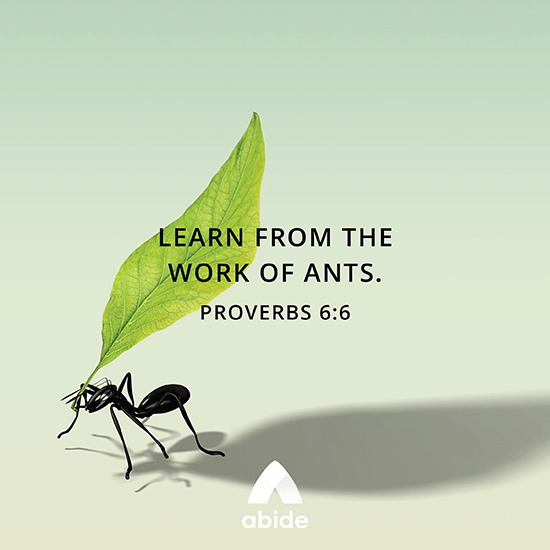
Had a great text question two weeks ago when I was preaching on the Ant & the Sluggard in Proverbs.  At some point in the message I must have discussed saving for retirement, because the texter wondered if that was just us reading American values back into the biblical text.  The short answer was yes, but from whence were those values formed?  It seems to me that saving in a time of plenty against a time of want isn’t just in Proverbs; it was exemplified by Joseph’s management of the famine in Egypt.  Perhaps as those teachings, of frugality and saving for lean times, passed from the Old Testament practices to the New Testament believers they were incorporated into the culture.  On the one hand it can easily be seen that it’s wise to have something put away for tomorrow.  On the other hand, the Bible is rife with warnings about loving money and trusting in it, about discontentment, and about being uncharitable in the face of another’s need.

How each person balances all those scriptural admonitions is up to them, but I’m also sure it’s heavily influenced by their culture.  When I was in the Canary Islands I witnessed many generational homes.  Each family built on according to their income and ability, while taking care of their parents and children, with the certainty that their kids would do the same.   So the wise thing for them was to invest in the family homestead. In America, as we have moved into the city, it’s considered responsible to save something so as not to be a burden (2 Thess 3:10), but that cultural interpretation doesn’t mean that an American Christian should fail to honor his Father and Mother, nor does it mean that the Islanders should be sluggards.

Never stop learning!  Explore other (traditional) cultural views of Scripture to see how they might add to understanding, but don’t forget that translation and interpretation is the Holy Spirit’s primary function.  Trust Him to handle your understanding as you dig into the whole of Scripture*  and don’t discount our traditional understanding unless there is a clear contextual reason to do so!! 

Remember when the Holy Spirit translated in real time?  

When the Day of Pentecost had fully come, they were all with one accord in one place.  And suddenly there came a sound from heaven, as of a rushing mighty wind, and it filled the whole house where they were sitting.  Then there appeared to them divided tongues, as of fire, and one sat upon each of them.  And they were all filled with the Holy Spirit and began to speak with other tongues, as the Spirit gave them utterance.  And there were dwelling in Jerusalem Jews, devout men, from every nation under heaven.  And when this sound occurred, the multitude came together, and were confused, because everyone heard them speak in his own language.  Then they were all amazed and marveled, saying to one another, “Look, are not all these who speak Galileans?  And how is it that we hear, each in our own language in which we were born?  Parthians and Medes and Elamites, those dwelling in Mesopotamia, Judea and Cappadocia, Pontus and Asia, Phrygia and Pamphylia, Egypt and the parts of Libya adjoining Cyrene, visitors from Rome, both Jews and proselytes, Cretans and Arabs—we hear them speaking in our own tongues the wonderful works of God.”  So they were all amazed and perplexed, saying to one another, “Whatever could this mean?”
Acts 2:1-12 NKJV
Thinking about Babies and Bathwater,
Pastor Scott

*Remember context is king!

The Problem of Sin – September 2, 2022

“Why didn’t God just create me ‘good’?”  Have you ever felt that way?  Questions like these come up when we’re witnessing.  C.S. Lewis had a great answer.  Spend a few minutes internalizing his logic so you are more ready next time someone asks for the reason you have hope!  ~Pastor Scott

God created things which had free will. That means creatures which can go either wrong or right. Some people think they can imagine a creature which was free but had no possibility of going wrong; I cannot. If a thing is free to be good it is also free to be bad. And free will is what has made evil possible. Why, then, did God give them free will? Because free will, though it makes evil possible, is also the only thing that makes possible any love or goodness or joy worth having. A world of automata—of creatures that worked like machines—would hardly be worth creating. The happiness which God designs for His higher creatures is the happiness of being freely, voluntarily united to Him and to each other in an ecstasy of love and delight compared with which the most rapturous love between a man and a woman on this earth is mere milk and water. And for that they must be free.

C.S. Lewis, Mere Christianity (1952; Harper Collins: 2001) 47-48.

GhostWriter – August 26, 2022

Right before the time block labeled “Write this week’s blog” I received this blog post via email.  Seemed like a Holy Spirit prompting.  ~Pastor Scott 😊

I Think I Will Try the Good Figs (Jeremiah 24:2)

August 24, 2022 by Kenneth Yates 

I can’t remember the last time I ate a fig. I vaguely remember that I didn’t particularly like them. The last time I thought about figs was when I was in the Army during the Iraqi War. The prime minister of that country famously said that his country did not fear the United States. He said that his people could eat figs for years and could survive to fight against us, the enemy.

So, when the Lord showed the prophet Jeremiah two baskets of figs in front of the temple, either in a vision or in reality, I am not sure what they would have looked like. We are told, however, that one basket was full of really good figs and the other was full of really bad, rotten ones (Jer 24:2). I also assume that you can tell a good fig from a rotten one by simply looking at them. You can do that with an apple, so why not a fig? If you were going to eat one, you would choose the good fig. I am also told that lots of people really love a good fig. I guess I don’t know what I have been missing.

We don’t have to guess at what the two baskets of figs represent. The Lord clearly told Jeremiah. The nation of Judea was in terrible straits. About 600 years before Christ, the Babylonians had taken the brightest and best of the land into captivity to Babylon. They would be forced to serve their enemy. This included people like Daniel and Ezekiel. The Babylonians had also taken those skilled in building palaces and monuments because they were needed for such work in Babylon. The rest of the Jews were left in the land of Judea.

One basket of figs represented the people taken as slaves to Babylon. The other the people left in the land. Which group was pictured as the bad figs and which was pictured by the good figs?

The people left in the land saw themselves as the good figs. Those taken away by the Babylonians had been forced to leave their homes and lands, and such things now belonged to the people still in the land. Those that remained in the land became instantly richer. They also had access to the temple in Jerusalem. They claimed that all of this showed that they were blessed by God (Ezek 11:14-15). The captives in Babylon were forced to live as slaves in a pagan country. They were clearly the bad figs in the eyes of the people. We would all initially agree with that assessment.

But the Lord showed Jeremiah, the people, and us that such conclusions were absolutely wrong. Looks can be deceiving. The slaves in captivity were the blessed, good figs. The people left in their home country were the rotten figs. In ten years, the people in the land would be decimated by famine, plagues, and war. The temple would be destroyed, and they would be ridiculed by the nations around them (Jer 24:8-10).

The captives in Babylon, on the other hand, would experience a spiritual renewal. They would learn in that land to give up their idolatry. God would return them to the land of Judea, where they would serve Him (Jer 24:5-7). He was going to bless them.

That is not what we expected. But it is a common theme in the Bible. God often blesses His people through difficulties. We may look at those believers going through difficult times and be thankful we are not in their shoes. We certainly should have compassion and sympathy for them. But we should not lose sight of the fact that God often uses such difficulties for the good of His children.

When we see economically poor believers, for example, we universally are grateful we are not in their shoes. But looks are indeed deceiving in that case. James says that God often uses such poverty to make those believers rich in the faith and rich in the coming kingdom (Jas 2:5). The Jews in Babylon were really the rich ones, not the ones with all the homes and land in Judea.

Many people today, including believers, are worried about what is going on in our country and world. The very fabric of our society seems to be falling apart. If the Lord doesn’t return soon, we fear we are facing very hard times for ourselves and our families. Even if we don’t think that is the case, we all go through difficulties at various times in our lives. When and if we do, our lives may seem like a basket of rotten fruit. We may look at those who are not experiencing such things and see their circumstances as like a big bowl of juicy cherries.

  • But the Lord knows what He is doing. He knew what He was doing with His people in Babylon, and He knows what He is doing with us. When He places us in these situations, let’s look at it like choosing between rotten and good fruit. Let’s be glad He lets us eat from the good basket.

by Kenneth Yates

Ken Yates (ThM, PhD, Dallas Theological Seminary) is the Editor of the Journal of the Grace Evangelical Society and GES’s East Coast and International speaker. His latest book is Hebrews: Partners with Christ.

Persistent  Perseverance in Prayer – August 19, 2022

Yesterday we celebrated the life of a woman who has attended this church since the 50’s.  She raised her 5 Children here, prayed her husband to Christ here, and has contributed to the health of this body by selfless acts of service and PRAYER.

Prayer was such an active part of her life (rolling lists were found of each adult child’s family), that the song her Children picked was Randy Travis’ “When momma prays.”  I must admit I found it hard to preach right after that one played, but even more than that I’ve been thinking alot about perpetual prayer, especially for spiritual victories.  

  • Remember that Israel cried out to God for 80 years before Moses came to redeem them
  • Remember that Jesus compared our prayer life to an obstinate widow before an evil (reluctant) judge.
  • Remember that patience is a fruit of the spirit.

Consider the words of James and the Story of John Knox below, 

Prayerfully yours,

Pastor Scott

Therefore be patient, brethren, until the coming of the Lord. See how the farmer waits for the precious fruit of the earth, waiting patiently for it until it receives the early and latter rain.  You also be patient. Establish your hearts, for the coming of the Lord is at hand.

Do not grumble against one another, brethren, lest you be condemned. Behold, the Judge is standing at the door!  My brethren, take the prophets, who spoke in the name of the Lord, as an example of suffering and patience.  Indeed we count them blessed who endure. You have heard of the perseverance of Job and seen the end intended by the Lord—that the Lord is very compassionate and merciful.

But above all, my brethren, do not swear, either by heaven or by earth or with any other oath. But let your “Yes” be “Yes,” and your “No,” “No,” lest you fall into judgment.

Is anyone among you suffering? Let him pray. Is anyone cheerful? Let him sing psalms. Is anyone among you sick? Let him call for the elders of the church, and let them pray over him, anointing him with oil in the name of the Lord. And the prayer of faith will save the sick, and the Lord will raise him up. And if he has committed sins, he will be forgiven.  Confess your trespasses to one another, and pray for one another, that you may be healed. The effective, fervent prayer of a righteous man avails much.  Elijah was a man with a nature like ours, and he prayed earnestly that it would not rain; and it did not rain on the land for three years and six months. And he prayed again, and the heaven gave rain, and the earth produced its fruit.

James 5:7-18; Emphasis Added

While very ill, John Knox, the founder of the Presbyterian Church in Scotland, called to his wife and said, “Read me that Scripture where I first cast my anchor.” After he listened to the beautiful prayer of Jesus recorded in John 17, he seemed to forget his weakness. He began to pray, interceding earnestly for his fellowmen. He prayed for the ungodly who had thus far rejected the gospel. He pleaded in behalf of people who had been recently converted. And he requested protection for the Lord’s servants, many of whom were facing persecution. As Knox prayed, his spirit went Home to be with the Lord. The man of whom Queen Mary had said, “I fear his prayers more than I do the armies of my enemies,” ministered through prayer until the moment of his death.

Our Daily Bread. April 11