
For centuries, the name Molech has echoed through Scripture and history as a symbol of terror and corrupted worship. The Bible presents Molech not as myth, but as a very real deity venerated by the Canaanites and later imitated by some Israelites who fell into apostasy. His worship represents one of the darkest chapters in Israel’s spiritual history—a chilling example of what happens when God’s people abandon His truth for the practices of surrounding nations.
In the Old Testament, God explicitly forbade Israel from participating in Molech worship. “Do not give any of your children to be sacrificed to Molech, for you must not profane the name of your God. I am the LORD” (Leviticus 18:21). Yet despite these commands, several kings of Judah defied God and reintroduced these abominations. King Ahaz “burned his son as an offering” (2 Kings 16:3), and later, King Manasseh “sacrificed his own son in the fire” (2 Kings 21:6). These horrific acts took place in the Valley of Ben Hinnom—known as Topheth—just outside Jerusalem’s walls.
The prophet Jeremiah condemned this valley as a place of judgment:
“They built high places for Baal in the Valley of Ben Hinnom to sacrifice their sons and daughters to Molech, though I never commanded—nor did it enter my mind—that they should do such a detestable thing” (Jeremiah 32:35). Because of this, the valley became a symbol of divine wrath and eternal punishment. In later Jewish and Christian thought, Gehenna (derived from Geh Hinnom) became synonymous with hell itself.
Outside the Bible, ancient sources provide eerie confirmation of such practices. Greek historians like Diodorus Siculus (1st century BC) and Plutarch described Phoenician and Carthaginian rituals in which children were offered to a god they equated with Cronus—a deity closely identified with the Canaanite Molech. According to their accounts, a bronze statue—human-shaped but crowned with a bull’s head—was heated from below until its metal glowed red, and the victims were placed into its blazing arms while drums beat to muffle their screams.
Archaeological excavations at Carthage, Rabat, and other Phoenician colonies have uncovered Tophet cemeteries containing urns filled with the cremated remains of infants and animals. While scholars debate whether all such offerings were true sacrifices or vows made during times of distress, the evidence unmistakably points to widespread ritual burning of children—a horrifying practice that mirrors the biblical description of Molech worship in the Canaanite world.
In Israel, the prophets condemned these acts as both moral and spiritual rebellion. They represented a complete inversion of God’s commands—offering life, the most sacred gift, to a false god of death. King Josiah, in his reforms, finally desecrated Topheth to put an end to these practices (2 Kings 23:10), symbolically reclaiming the land from darkness.
Molech’s image—part history, part warning—embodies the tragic pattern of idolatry: humanity’s attempt to appease false gods through destruction. The fires of Molech may have burned out long ago, but his legacy endures as a lesson written in both Scripture and stone. He stands as a symbol of what happens when devotion divorces itself from truth—when man worships power, fear, or self in the place of the living God.
Today, Molech’s name is remembered not as one of honor, but as a haunting reminder of how far people can fall when they reject the Creator. His story calls believers to remain steadfast in the worship of the one true God, whose commands protect life and whose fire purifies rather than destroys.
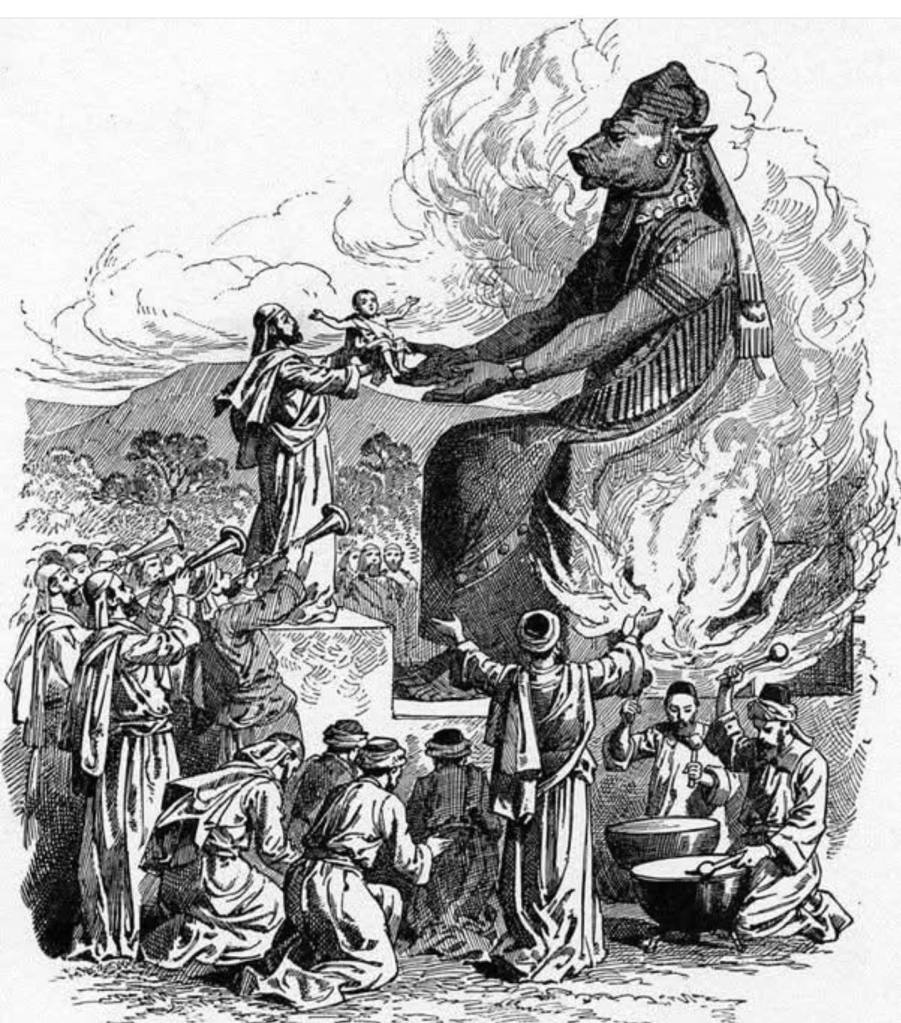
NOTE FROM PASTOR SCOTT – I had a blog about “social issues” ready to go for today. In it I referenced this particular demon; and this morning this article posted to my feed. Thought it was too good not to share!

 Grace Notes