
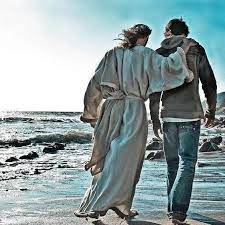
In Matthew 5, in addition to the Beatitudes, Jesus uses six antitheses to talk about the law in an internalized way. This past Sunday (10/22) we looked at the 4th and the 5th during the Sunday Sunday sermon; His discussion about oaths and His discussion about retaliation. I concluded that God calls us to live honest lives of service to others, and I stand by that, but I regret that I left some things unsaid regarding turning the other cheek and its relation to self-defense.
Levitical law* puts a limit on how much a plaintiff can ask for (or take) in a civil case. “Take” because the Jews in Jesus’ time didn’t have access to courts and the temptation was to take “justice” into their own hands. Jesus famously said, “You have heard it said, ‘An eye for an eye and a tooth for a tooth, But I say to you, do not resist an evil person; but whoever slaps you on your right cheek, turn the other to him also..’” In a right-handed world, a slap on the right cheek is most likely a back-hand, meaning an insult more than a deadly attack. So not resisting is putting up with the sting of humiliation rather than the risk of life (as I made it out to be from the pulpit). On Sunday I was envisioning a life or death encounter and shared one third of my own personal conviction (Romans 14:5b).
- If someone is threatening my life and I have the ability to “return fire”, it occurs to me that even though I have the right to self defense in the USA and even though the Bible doesn’t prohibit self-defense, both the thrust of the Sermon on the Mount and the logic that I have a guaranteed home in heaven and my enemy might not, is enough to stay my hand.
- If someone is attacking my family it is MY job to stop them; up to and including deadly force, if absolutely needed.
- I believe that law enforcement and the military were ordained by God and carry “the sword” to avenge evil (Romans 13:1-7). It’s my conviction that a Christian ought to be able to serve in either.
Conclusion: “Turn the other cheek” could justifiably apply only to insults and those only of a spiritual nature, all the way through to conscientious objection to all forms of violence. My personal stand is simply against personal self-defense and that’s not a stand that really gets tested. I think in my world and yours, “turning the other cheek” is more about not responding in, or holding bitterness against, those who step on our feelings! That said, convictions about home defense and about carrying arms in public service ought to be based on Scripture and personal conviction. Just like eating meat from a pagan market, or which holidays you honor, your conviction is not my concern as long as you are standing rightly before God and mine isn’t yours as long as I’m also square with God! “Whatever is not from faith, is sin” (Romans 14:23b).
Pastor Scott
*Leviticus 24:19-21 NASB 1995
“ If a man injures his neighbor, just as he has done, so it shall be done to him: fracture for fracture, eye for eye, tooth for tooth; just as he has injured a man, so it shall be inflicted on him. Thus the one who kills an animal shall make it good, but the one who kills a man shall be put to death.”
 Grace Notes